


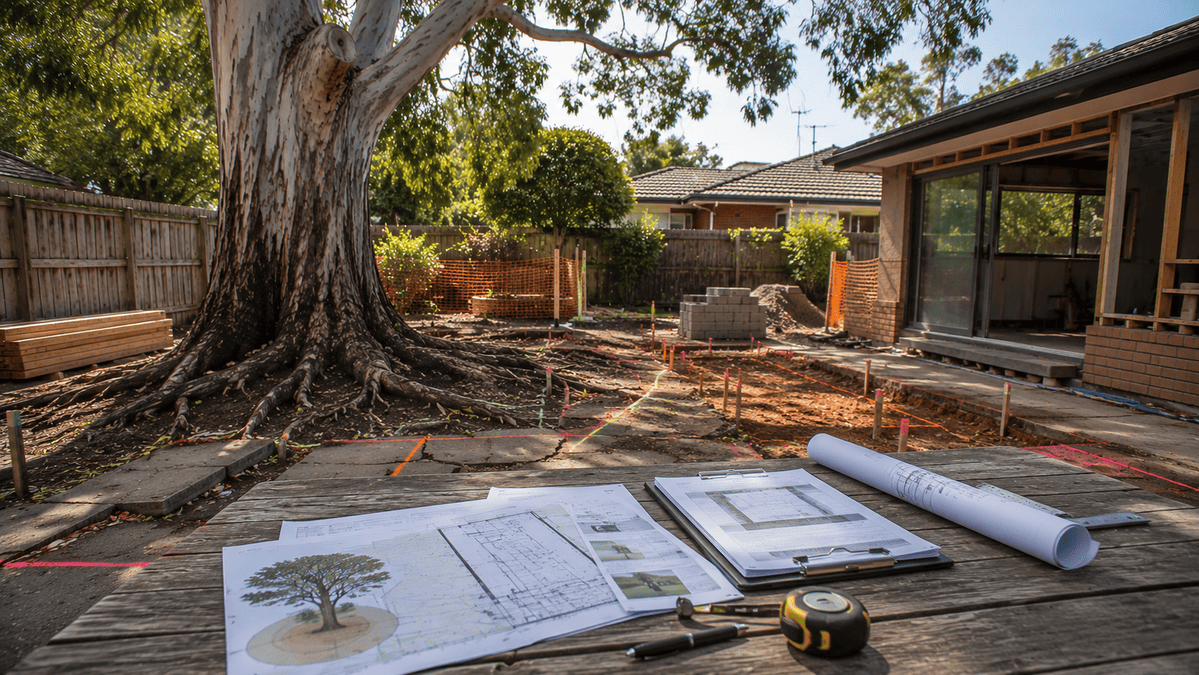
Building on your property sounds simple enough. Draw the plans, hire the builder, survive the invoices. But if there are established trees nearby, especially in Australia where councils tend to care deeply about trees and slightly less about your stress levels, things can get complicated.
That’s where Arboricultural Impact Assessments come in.
If you’re planning a renovation, extension, subdivision, or new development, Arboricultural Impact Assessments help identify how construction may affect nearby trees and whether those trees could affect your project.
In short, they’re not just paperwork. They can protect your budget, your timeline, and your chances of getting council approval.
Quick Overview
Before we dig into the roots of it all, here’s the quick summary.
At a Glance:
Arboricultural Impact Assessments can help you:
- Identify tree protection requirements before building starts
- Understand how construction may impact root systems
- Avoid council compliance issues and delays
- Protect significant or regulated trees
- Support smoother development applications
- Reduce the risk of expensive redesigns
Think of it this way: if your builder is focused on concrete, your arborist is focused on what’s underneath it. Usually roots. Sometimes problems.
Want to dive deeper? Keep reading.
What Are Arboricultural Impact Assessments?
An Arboricultural Impact Assessment (AIA) is a professional report prepared by a qualified arborist to evaluate how proposed construction may affect trees on or near a site.
It looks at things like:
- Tree health and condition
- Root Protection Areas (RPA)
- Tree Protection Zones (TPZ)
- Canopy spread
- Structural stability
- Potential conflicts with building works
The goal is simple:
Protect the trees while helping your project move forward.
Because apparently, even trees need legal representation now.
Why Are Arboricultural Impact Assessments Important in Australia?
Australian councils have strict vegetation and tree preservation policies, especially in urban growth areas.
Whether you’re in Melbourne, Sydney, Brisbane, or regional areas, large trees often fall under local protection overlays.
Without proper assessment, you may face:
- Development application rejection
- Mandatory design changes
- Fines for root damage
- Delayed construction approvals
And delays in construction are like termites: expensive and never welcome.
How Building Can Affect Trees
Construction near trees can cause serious damage, even if the trunk looks untouched.
Common risks include:
Root Damage
Excavation can sever structural roots, destabilising the tree.
Important: Most roots spread far wider than people think.
A tree’s roots don’t politely stay in one spot. They roam.
Soil Compaction
Heavy machinery compresses soil, reducing oxygen and water movement.
This can slowly weaken tree health.
Like standing on someone’s chest while asking why they look uncomfortable.
Changes in Water Flow
New driveways, paving, and drainage systems can alter water movement.
Trees may suffer from:
- Waterlogging
- Drought stress
- Root rot
Canopy Damage
Scaffolding, cranes, or construction materials can damage branches.
This can affect structural balance and long-term growth.
What Councils Want to See in Arboricultural Impact Assessments
Councils generally review AIAs to understand whether trees can coexist with the proposed development.
Typical report inclusions:
✔ Tree species and significance
✔ Health and life expectancy
✔ Structural condition
✔ Recommended Tree Protection Zones
✔ Impact severity from construction
✔ Management recommendations
Expert Insight:
A strong Arboricultural Impact Assessment can often make the difference between approval and costly revisions.
Councils love evidence. It’s their comfort blanket.
Quick Guide: Planning a Backyard Extension Near Trees
Imagine this:
You’re adding a rear extension to your home, but there’s a mature eucalyptus near the boundary.
Council requests an Arboricultural Impact Assessment.
Now what?
Common Challenges
- Will the roots interfere with the slab?
- Can the extension stay within the Tree Protection Zone?
- Will council force design changes?
How to Solve It
Start with an early tree inspection
Knowing the tree’s condition helps you plan properly.
Map the Tree Protection Zone
This shows where building can safely happen.
Work with your designer and arborist together
It avoids conflicts later.
Use the report in your DA submission
This improves transparency and strengthens approval chances.
Why It Works
Early planning reduces surprises. Instead of redesigning halfway through, you make informed decisions upfront.
That saves money, time, and the emotional breakdown usually scheduled for week six.
Did You Know?
Tree roots can extend up to three times wider than the canopy.
So that tree you think is “well over there” may already be under your future driveway.
Nature has no respect for your property lines.
The Cost of Skipping an Arboricultural Impact Assessment
Skipping an AIA can lead to serious consequences.
Financial Risks
- Redesign fees
- Delayed approvals
- Replanting requirements
- Damage repairs
Legal Risks
Some councils may issue penalties if protected trees are harmed without approval.
Even accidental damage can become your responsibility.
Humans invented “accidental” mainly to explain expensive mistakes.
Project Delays
Without the right documentation, your build may stall.
Builders waiting around still charge money.
A tragic little feature of capitalism.
Quick Quiz: Do You Need an Arboricultural Impact Assessment?
Answer these:
1. Is there a tree within 5-10 metres of your planned build?
- Yes
- No
2. Are you submitting a development application?
- Yes
- No
3. Is the tree large, mature, or native?
- Yes
- No
4. Will excavation happen near the tree?
- Yes
- No
Results:
Mostly Yes?
You likely need an Arboricultural Impact Assessment.
Mostly No?
Maybe not yet, but it’s worth checking before making plans.
Because assumptions are cheap. Fixing them isn’t.
Survey: What Concerns You Most About Building Near Trees?
Choose your biggest concern:
- Tree roots damaging foundations
- Council approval delays
- Removing a protected tree
- Structural risks from large trees
- Unexpected redesign costs
If you picked more than one, congratulations. You’re experiencing property development correctly.
Choosing the Right Arborist for an Impact Assessment
Not every arborist provides council-ready reports.
Look for:
- Formal arboricultural qualifications
- Experience with development applications
- Understanding of local council tree policies
- Detailed written reports
- Insurance and compliance knowledge
Ask them:
“Do your Arboricultural Impact Assessments align with Australian Standard AS4970?”
That’s the benchmark for tree protection on development sites.
And yes, there’s a standard for tree safety. Humans standardise everything.
FAQs About Arboricultural Impact Assessments
How long does an Arboricultural Impact Assessment take?
Most reports take between 3 to 7 business days depending on site complexity.
Urgent reports may be available.
Are AIAs mandatory?
Not always.
But many councils require them if development affects existing trees.
Always check local planning rules.
Can I build inside a Tree Protection Zone?
Sometimes, but it depends on the impact and mitigation measures.
A professional report is usually essential.
How much does an Arboricultural Impact Assessment cost?
Costs vary depending on:
- Number of trees
- Site size
- Complexity
- Reporting requirements
It’s usually far cheaper than redesigning approved plans.
What is AS4970?
AS4970 is the Australian Standard for tree protection during development.
It sets guidelines for protecting trees on construction sites.
Think of it as the rulebook for not upsetting roots.
Can an AIA help save a tree?
Yes.
It can identify ways to adjust the build and reduce harm.
Sometimes small design changes make a big difference.
Conclusion
If you’re building near trees in Australia, Arboricultural Impact Assessments are one of the smartest early steps you can take. They help identify risks, protect valuable trees, and improve your chances of smooth council approval.
More importantly, they give you clarity before construction begins. Instead of dealing with unexpected problems halfway through a project, you can plan around them from the start.
When trees and buildings share the same space, balance matters. And with the right assessment, you can protect both your development and the natural environment without turning your project into a very expensive lesson in root systems.


Leave a Reply