


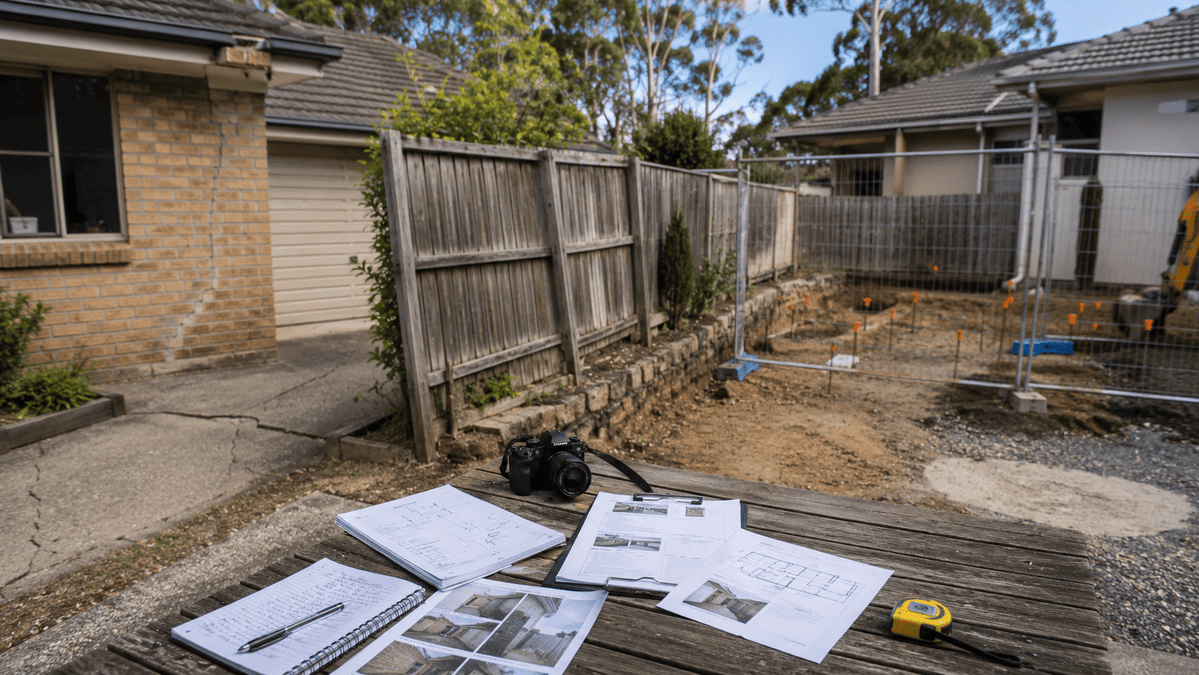
Construction projects can be exciting. New homes, extensions, demolitions, and developments all promise progress. But they also come with a less glamorous side effect: disputes.
And in Australia, where homes often sit close together and excavation can shake the neighbour’s walls like a bad nightclub speaker, disagreements can escalate quickly.
That’s where Dilapidation Reports come in.
If you’re planning construction, demolition, or major renovations, Dilapidation Reports can document the condition of surrounding properties before work begins. This creates a clear record of existing cracks, movement, and defects, helping prevent arguments later.
If you’re searching for Dilapidation Reports to understand how they work and why they matter, this guide breaks down the seven costly disputes they can help avoid.
Quick Overview
Before construction starts, Dilapidation Reports can help prevent disputes involving:
- Existing cracks blamed on new construction
- Structural movement claims
- Fence and boundary damage
- Vibration-related damage complaints
- Water runoff or drainage issues
- Driveway and footpath damage
- Legal disagreements over repair responsibility
In simple terms, they protect everyone involved by documenting what’s already there before the first shovel hits the ground.
Want to dive deeper? Keep reading.
What Are Dilapidation Reports?
A dilapidation report is a professional assessment of a property’s current condition before nearby building work begins.
It usually includes:
- Detailed notes
- High-resolution photos
- Existing cracks and defects
- Structural observations
- Surface conditions
Think of it like taking “before photos” for your property. Except instead of holiday memories, it’s wall cracks and concrete chips. The romance of construction.
These reports are commonly used across Australia for:
- New home builds
- Excavations
- Demolitions
- Large renovations
- Infrastructure projects
1. Existing Cracks Being Blamed on Your Project
This is probably the most common dispute.
Your neighbour notices cracks after your excavation starts. Problem is, those cracks were already there.
Without a Dilapidation Report, proving that becomes difficult.
Why it matters:
A report creates a time-stamped record of:
- Wall cracks
- Ceiling movement
- Brickwork separation
- Existing plaster damage
Key takeaway:
If it existed before, the report proves it.
2. Structural Movement Claims
Excavation and heavy machinery can cause vibration, particularly in dense urban areas.
Neighbours may claim:
- Their foundations shifted
- Walls moved
- Floors became uneven
A dilapidation report establishes whether those issues were pre-existing or new.
Pro Tip:
This is especially important for homes on reactive clay soils, which are common in parts of Australia.
Because Australian soil loves moving almost as much as property prices.
3. Fence Damage Disputes
Shared fences are surprisingly emotional territory.
One scratch and suddenly everyone becomes a legal philosopher.
Construction can affect:
- Boundary fences
- Retaining walls
- Gate alignment
A Dilapidation Report documents their condition before works start.
This prevents arguments like:
“That crack wasn’t there before.”
Maybe it was. Maybe it wasn’t. The report knows.
4. Vibration Damage Complaints
Heavy equipment like excavators, compactors, and demolition gear can create vibration.
This can lead to complaints about:
- Loose tiles
- Plaster cracks
- Window movement
- Ceiling separation
Did You Know?
Even minor vibration can trigger visible changes in already weak structures.
That’s why older neighbouring homes should always be documented before work starts.
It’s less about blame and more about evidence. Humans tend to appreciate evidence right before they start yelling.
5. Drainage and Water Runoff Issues
Construction often changes the natural flow of water.
Neighbours may later claim:
- Flooding increased
- Water pools near boundaries
- Drainage lines were damaged
A dilapidation report can document:
- Existing drainage conditions
- Surface grading
- Water stains
- Existing erosion
This is especially important during Australian storm seasons, when water finds every possible way to ruin your week.
6. Driveway and Footpath Damage
Trades, trucks, skip bins, and heavy deliveries can damage surrounding surfaces.
Common disputes involve:
- Cracked driveways
- Broken kerbs
- Damaged pavers
- Footpath sinking
A professional report documents the state of these areas before work begins.
Bold truth:
Concrete cracks don’t care about your building timeline.
7. Legal Disputes Over Repair Costs
This is where things get expensive.
Without documentation, disputes can turn into:
- Insurance claims
- Legal letters
- Delays
- Repair bills
A Dilapidation Report provides neutral evidence that can help resolve disputes faster.
Sometimes it can prevent them entirely.
And honestly, avoiding legal fees is one of the few universally good life decisions.
Quick Guide: When Should You Get a Dilapidation Report?
Imagine this:
You’re planning a major extension. Excavation starts next month, and your builder says it’s routine.
Then your neighbour asks:
“What if my wall cracks?”
Awkward.
Common Challenges
- How close is your work to neighbouring properties?
- Will excavation or demolition cause vibration?
- Are there already visible cracks nearby?
How to Solve It
Book It Before Work Starts
Timing matters. Reports are most useful before machinery arrives.
Include Adjacent Structures
Look at fences, driveways, walls, and shared boundaries.
Use Qualified Inspectors
Detailed photos and professional notes matter.
Keep Records Accessible
Store the report safely in case issues arise later.
Why It Works
A good dilapidation report creates clarity. It protects builders, homeowners, and neighbours by removing guesswork.
That means fewer disputes, less stress, and smoother construction.
Quick Quiz: Do You Need a Dilapidation Report?
Answer these:
1. Are you excavating near another property?
2. Will heavy machinery be used?
3. Are neighbouring structures older?
4. Is there a shared fence or retaining wall?
5. Are you demolishing part of the site?
Results:
4-5 Yes:
You almost definitely need one.
2-3 Yes:
Strongly recommended.
0-1 Yes:
Maybe not essential, but still worth considering.
Construction surprises are rarely the fun kind.
FAQs About Dilapidation Reports
Are Dilapidation Reports legally required in Australia?
Not always.
But councils, developers, and builders often require them depending on the project.
They’re especially common in high-density areas.
Who pays for a Dilapidation Report?
Usually the property owner or builder organising the work.
It’s part of due diligence.
Think of it as insurance against future arguments.
How long does a Dilapidation Report take?
Most inspections take 1 to 3 hours depending on property size and complexity.
Larger sites may take longer.
Cracks, sadly, are thorough.
Do Dilapidation Reports cover internal and external damage?
Yes, if access is provided.
This can include:
- Walls
- Ceilings
- Floors
- Driveways
- Fences
- Rooflines
The more complete the report, the better.
Can neighbours request a copy?
In many cases, yes.
Sharing the report can improve transparency and reduce tension.
A rare and beautiful thing in property matters.
Are Dilapidation Reports only for large developments?
No.
Even small home extensions, pools, or garage builds can benefit from them.
It’s about proximity and risk, not project size.
Conclusion
Construction projects come with enough moving parts without adding neighbour disputes, legal headaches, or unexpected repair bills. That’s why Dilapidation Reports are such a valuable part of the planning process.
They create a clear record of existing property conditions before work begins, helping protect everyone involved. From cracks and fences to drainage and driveways, these reports reduce uncertainty and make it easier to resolve issues fairly.
If your project involves excavation, demolition, or nearby structures, getting a dilapidation report early can save time, money, and a lot of unnecessary stress. In construction, proof matters. And memory is a terrible witness.


Leave a Reply