


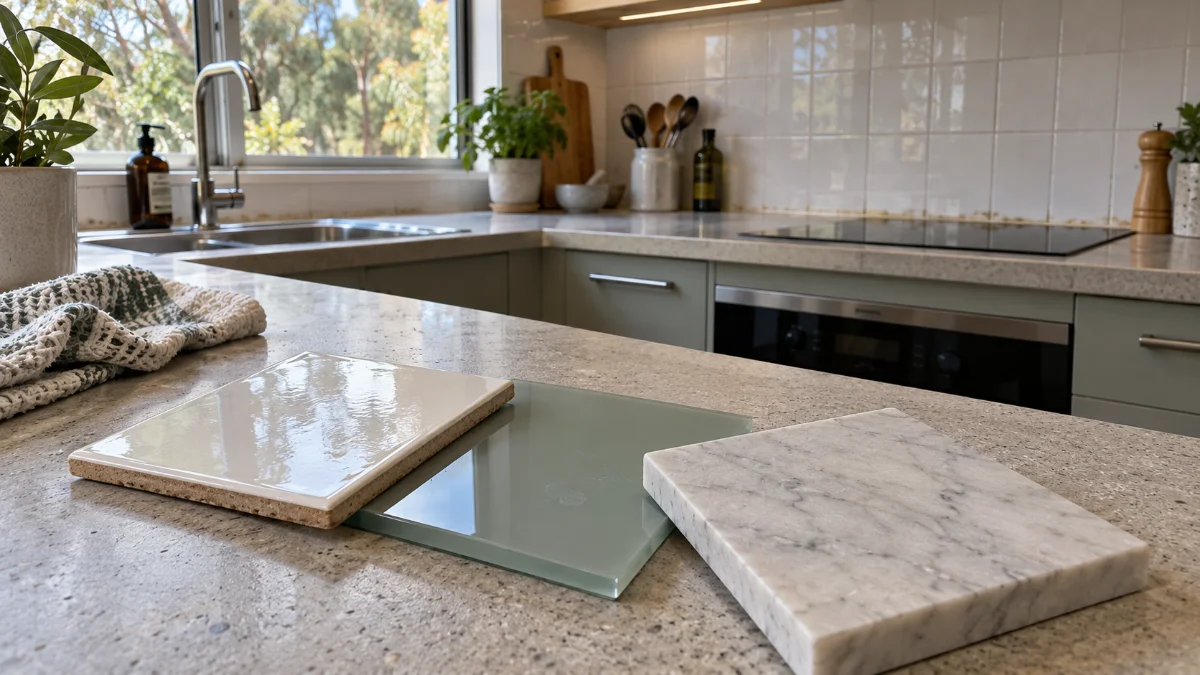
Compare kitchen splashback materials by checking heat suitability, everyday cleaning, installation requirements and the total finished cost. Tiles, glass, natural stone and porcelain panels offer different finishes and maintenance needs. The exact product, wall construction and cooktop arrangement need to be considered together.
Start with the appliance model, the condition of the existing wall and your final kitchen layout. These details help a tiler, glazier or stone fabricator explain which options are suitable and what the installation will involve.
Cleaning and heat requirements
Think about the areas that receive the most use. Grease behind the cooktop, water around the sink and food splashes near preparation areas create different cleaning demands.
A smooth surface may be straightforward to wipe, while textured finishes and grout joints need their own care routine. Ask for the cleaning instructions for the actual product you are considering, including the grout and sealant where relevant.
Natural stone needs particular attention. Acid-sensitive stones can be damaged by cleaners containing vinegar or lemon. A cleaning method suitable for one splashback may be unsuitable for another.
Heat suitability also needs a specific answer. For a gas cooktop, have a licensed gasfitter confirm the applicable clearances and any required protection for nearby combustible surfaces. Energy Safe Victoria’s guidance requires the greater clearance specified by the applicable gas standard or the appliance manufacturer’s instructions.
Ask about the complete wall construction, including the backing material and how the splashback is fixed. A finish described as heat resistant does not establish that every installation behind it will be suitable.
For electric and induction cooktops, check the appliance instructions alongside the splashback supplier’s requirements. Confirm suitability before ordering a custom panel or committing to a layout.
Tile glass and stone
Use the following comparison to shortlist products, then check the specifications and care instructions for each option.
| Material | Cleaning considerations | Installation questions |
|---|---|---|
| Glazed ceramic or porcelain tiles | Smooth faces can be easy to wipe. Grout joints and surface texture affect the cleaning routine. | What grout, joint layout and edge finishes are included? |
| Toughened glass panels | Broad, smooth panels reduce the number of joints. Check how the chosen colour and finish show everyday marks. | Are the glass specification, cut-outs and final measurements confirmed before manufacture? |
| Natural stone | Care depends on the stone and finish. Acid-sensitive varieties need suitable cleaning products. | Does this stone need sealing, and how will its pattern, joints and exposed edges be handled? |
| Large-format porcelain panels | Follow the selected product’s cleaning guidance. Exposed edges still need protection from hard knocks. | Where will joins fall, and how will the panels be fabricated, supported and delivered? |
For a tiled splashback, ask to see the proposed tile and grout together. Joint width, layout and colour change the finished appearance, particularly with small tiles or a contrasting grout.
With glass, check a physical colour sample. Standard glass can introduce a green tint, which may affect pale painted colours. Ask whether standard or low-iron glass is being quoted.
For stone and patterned porcelain, request a layout showing where joins and cut-outs will fall. Discuss how the pattern will appear across the finished wall.
Check exactly what “stone” means. For new work, Australia’s engineered-stone ban covers benchtops, panels and slabs meeting the regulated definition. Natural stone is a separate category, and resin-free porcelain and sintered stone products are excluded from that definition.
Ask for the product’s exact name, composition and confirmation that it can legally be supplied and installed for the proposed use. If an existing splashback is engineered stone, arrange any removal or modification through a qualified tradesperson using the required dust controls.
Installation constraints
Installation details can change both the shortlist and the quote. Ask the installer to review the following before materials are ordered.
- The existing wall. Confirm whether old finishes need removal and whether the wall requires repairs or preparation. The selected fixing system needs a suitable, sound surface.
- Final dimensions and cut-outs. Settle benchtop heights, cabinetry and power-point positions before custom panels are manufactured. Toughened glass cannot be cut down or drilled after toughening.
- Finished thickness. Adding material over an existing surface changes the finished wall position. Ask how this affects appliance clearances, trims and power-point fittings.
- Panel access and joint positions. For large pieces, confirm delivery access through doors, stairs and tight corners. Ask where joins will be located if the design needs more than one panel.
- Edges and junctions. Agree on the finish at the benchtop, cabinet ends, windows and exposed corners. Ask which joints require flexible sealant and what maintenance it needs.
Confirm who coordinates any electrical or gas work associated with the installation. Power-point changes and appliance disconnection should be planned with the appropriately licensed trades.
Ask when final measuring takes place and which parts of the kitchen must already be installed. Also confirm how long adhesives or sealants need to cure before normal use and cleaning.
Budget questions
Compare the total installed price for the same area and scope. A material price per square metre does not tell you what wall preparation, fabrication and associated trade work will cost.
Ask each supplier or installer:
- What exact product, finish, thickness and quantity does the quote cover?
- Are removal, disposal and protection of the surrounding kitchen included?
- Does the price allow for wall repairs and any required backing materials?
- Are measuring, cut-outs, edge finishing, delivery and installation included?
- Who pays for associated electrical or gas work?
- Are grout, sealants, any required sealing and the final clean included?
- Does the total include GST where applicable, and what exclusions remain?
Request separate pricing for optional details such as extending the splashback to the ceiling, adding window returns or changing the tile pattern. This makes it easier to decide where to spend the budget.
Ask how unexpected wall damage or changed measurements would be handled. Agree on how additional work will be explained and priced before it proceeds.
Before approving the order, keep a record of the selected sample, product code, layout and written scope. Request the care instructions and relevant warranty information at handover.
Conclusion
A useful comparison of kitchen splashback materials connects the finish you like with the way your kitchen will be used. Confirm cooking-zone suitability, cleaning needs and installation details before choosing between tiles, glass, natural stone or porcelain.
Then compare complete quotes using the same layout and work scope. Clear decisions about backing materials, cut-outs, joints and associated trades help you understand the finished cost before installation begins.
FAQs
Can new tiles be installed over an existing tiled splashback?
Sometimes, provided the existing tiles and wall are suitable for the proposed system. Have the installer assess adhesion, surface condition and preparation requirements. The additional thickness also needs to be considered around appliances, fittings and exposed edges.
Does every natural stone splashback need sealing?
No. Sealing requirements depend on the particular stone and its treatment. Ask the supplier for a written recommendation and maintenance schedule. Where sealing is recommended, it improves resistance to staining but does not make the surface stain proof.
Sources
- Energy Safe Victoria: Protection of combustible surfaces. Gas appliance clearances and protection requirements.
- Safe Work Australia: Engineered stone ban. Product definitions, exclusions and permitted work with existing engineered stone.
- Tough Glass: Glass splashbacks. Glass specifications, colour considerations and manufacturing constraints.
- Natural Stone Institute: Care and cleaning of natural stone. Cleaning compatibility and product-specific sealing needs.
- ARDEX Australia: Tiling over existing surfaces. Assessment and preparation considerations for tiling over tiles.
- Beaumont Tiles: Frequently asked questions. Tile characteristics, samples and grout care.
- Caesarstone Australia: Porcelain care and maintenance. Product-specific cleaning guidance and protection of exposed edges.


Leave a Reply