


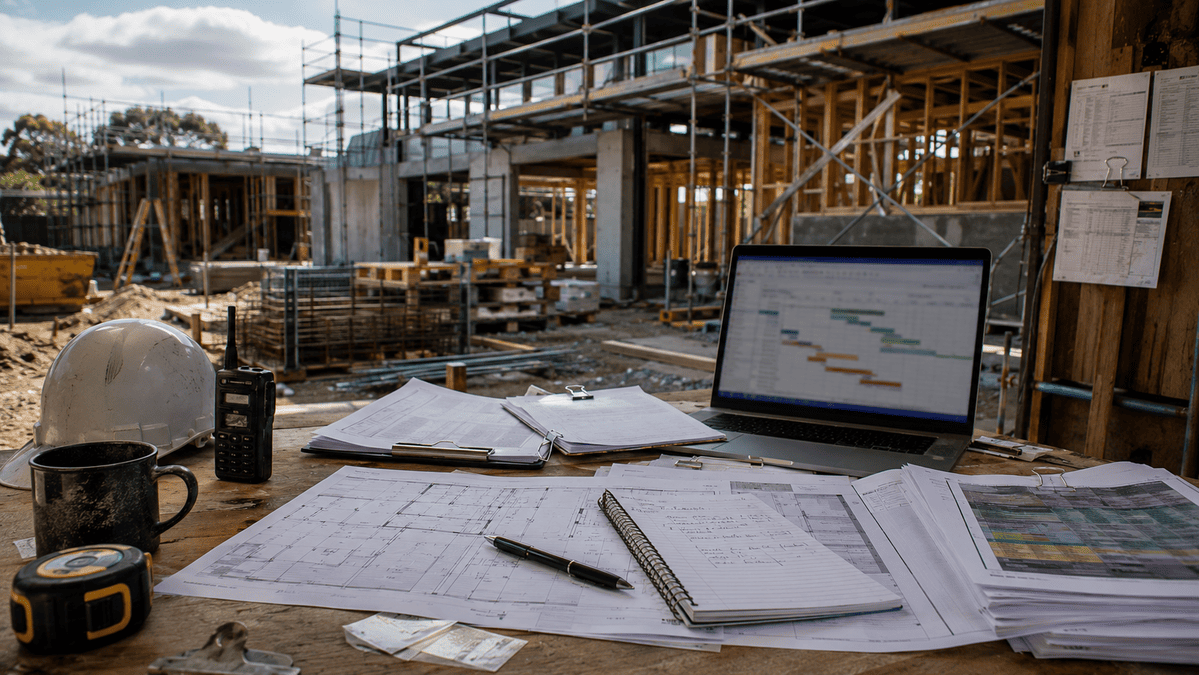
Starting a construction project can feel exciting… right up until the quotes, timelines, approvals, and trade schedules start piling up like leftover bricks in the backyard.
Whether it’s a home renovation, custom build, office fit-out, or large-scale commercial development, managing construction involves dozens of moving parts. That’s exactly where Building Project Managers come in.
Building Project Managers help coordinate every stage of a project, from planning and budgeting to scheduling and quality control. Their role is to keep everything moving smoothly, reduce costly mistakes, and make sure the final result matches the original vision.
For Australian homeowners, developers, and business owners, understanding the value of Building Project Managers can mean the difference between a well-managed build and a complete logistical circus.
Quick Overview
At a Glance:
Here’s what Building Project Managers do:
- Coordinate timelines, budgets, and trades
- Manage communication between contractors and clients
- Reduce delays and budget overruns
- Help identify risks early
- Keep quality standards on track
- Ensure compliance with Australian building regulations
Think of them as the conductor of the orchestra. Without one, everyone may still play… just not the same song.
Want to dive deeper? Keep reading.
What Do Building Project Managers Actually Do?
At their core, Building Project Managers oversee construction projects from start to finish.
Their main goal?
To ensure the project is completed:
✔ On time
✔ On budget
✔ To the expected quality
That sounds simple until you realise construction involves architects, engineers, plumbers, electricians, council approvals, suppliers, weather delays, and at least one person saying, “That wasn’t in the quote.”
Their responsibilities usually include:
- Project planning
- Budget management
- Scheduling
- Contractor coordination
- Risk management
- Site inspections
- Compliance checks
In short, they keep everything organised so you don’t have to.
Why Building Project Managers Matter in Residential Projects
Homeowners often underestimate how complex residential builds can be.
Even a “simple” extension can involve:
- Structural modifications
- Engineering approvals
- Plumbing relocations
- Material delays
- Unexpected site issues
And older Australian homes? They hide surprises like a reality TV plot twist.
Key benefits for homeowners:
Better Budget Tracking
A project manager helps monitor spending from the beginning.
This reduces:
- Cost blowouts
- Scope creep
- Unplanned upgrades
Because “just adding one more thing” usually becomes five more things.
Smoother Trade Coordination
Timing matters.
There’s no point having painters arrive before electricians finish.
Yet somehow, it happens.
Building Project Managers coordinate the sequence of work to keep everything efficient.
Quality Control
A rushed build often leads to poor workmanship.
Project managers inspect progress and ensure standards are maintained.
That means fewer defects later.
Why Building Project Managers Are Essential in Commercial Projects
Commercial construction is even more complex.
Larger budgets, stricter regulations, and multiple stakeholders mean more room for things to go wrong.
A lot more.
Commercial project management often involves:
- Larger teams
- Higher compliance requirements
- Safety regulations
- Tight deadlines
- Business continuity planning
Example:
An office fit-out delayed by two months doesn’t just cost construction money.
It can affect:
- Staff operations
- Lease agreements
- Customer access
- Revenue
That’s why Building Project Managers play a major role in commercial success.
Common Challenges They Help Solve
Construction problems are common. Some are avoidable.
Here’s where project managers make the biggest difference.
Budget Blowouts
Without tracking, small variations become major costs.
Pro Tip 📌
Always ask for variation costs in writing before approving changes.
Communication Breakdowns
Miscommunication between trades can cause delays, rework, and frustration.
A project manager acts as the central contact.
This keeps information clear and consistent.
Timeline Delays
Weather, suppliers, and labour shortages can all slow things down.
Project managers adjust schedules and minimise downtime.
Because waiting for materials has somehow become a modern hobby.
Quick Guide: Managing a Build Without the Chaos
Imagine you’re planning a major home extension.
You’ve got the design, the budget, and the excitement.
But then the real questions begin.
Common Challenges
- Who coordinates all the trades?
- What happens if the budget starts creeping up?
- How do you know the work is meeting standards?
How to Solve It
Set clear project goals
Know your priorities before construction starts.
Track spending weekly
Regular budget reviews prevent surprises.
Appoint one central manager
One point of communication reduces confusion.
Inspect progress regularly
Spotting issues early saves money later.
Why It Works
Construction is smoother when someone oversees the big picture.
It keeps everyone aligned and reduces stress for the owner.
Did You Know? 🏗️
Research across the construction industry consistently shows that projects with strong management are more likely to finish on time and within budget.
That’s not magic.
That’s planning.
Turns out chaos isn’t actually a strategy.
Quick Survey: Do You Need a Building Project Manager?
Answer honestly.
1. Is your project involving multiple trades?
A) Yes
B) No
2. Is your budget tight and important to control?
A) Absolutely
B) Not really
3. Do you have time to manage contractors yourself?
A) No
B) Yes
4. Are there council approvals involved?
A) Yes
B) No
Results:
Mostly A’s?
A Building Project Manager could save you serious time, money, and headaches.
Mostly B’s?
Your project may be simpler, but guidance can still help.
What Makes a Good Building Project Manager?
Not all project managers are created equal.
Look for these qualities:
Strong communication
They should explain things clearly without drowning you in jargon.
Local knowledge
Australian building regulations, council requirements, and construction standards matter.
Experience with similar projects
Residential and commercial builds are very different.
Choose someone who understands your project type.
Problem-solving ability
Construction never goes perfectly.
Good project managers stay calm and fix problems fast.
That alone is worth a lot.
FAQs About Building Project Managers
Do I need one for a small renovation?
Not always, but even smaller projects can benefit if multiple trades are involved.
Especially if you value your sanity.
Are Building Project Managers expensive?
They add a cost, yes.
But they often save money by preventing mistakes and delays.
Can a builder also be the project manager?
Sometimes.
But independent project managers offer an extra layer of oversight.
Do they handle council approvals?
They often assist or coordinate with consultants handling approvals.
This depends on the project.
Are they only for commercial projects?
No.
Residential renovations, extensions, and new builds can all benefit.
How early should I hire one?
Ideally at the planning stage.
The earlier they’re involved, the more value they can provide.
Final Thoughts
Construction projects, whether residential or commercial, are full of moving parts. Timelines shift, budgets stretch, and unexpected issues can appear when you least expect them.
That’s why Building Project Managers are so valuable.
They bring structure, communication, and oversight to what can otherwise become a stressful and expensive process. From coordinating trades to managing budgets and maintaining quality, their role helps projects stay on track and move forward with fewer surprises.
And in construction, fewer surprises is about as close to luxury as it gets.


Leave a Reply