


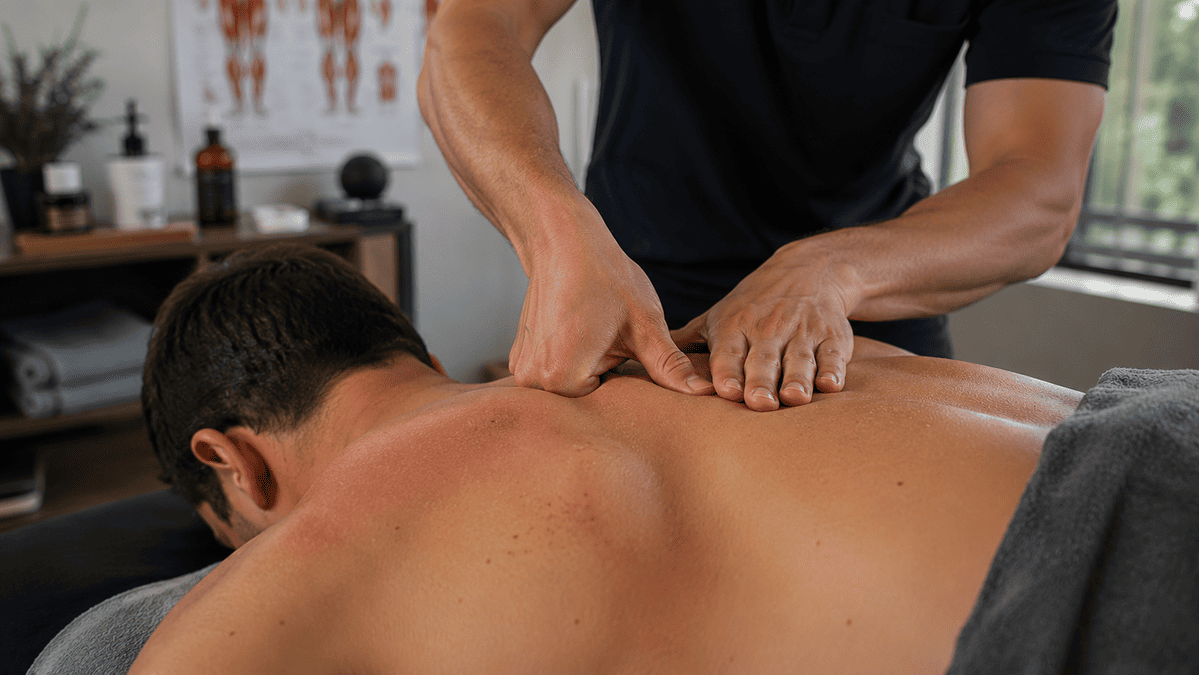
Ever pressed into your shoulder or back and felt a painful lump that seems to have taken permanent residence there? That’s likely a muscle knot, and no, it’s not your body trying to tie itself into decorative rope.
Muscle knots are one of the most common reasons people seek Deep Tissue Massage. They can feel tight, sore, and stubborn, often affecting how you move, work, and sleep. For many Australians balancing long workdays, stress, training, and poor posture, these knots can become an everyday problem.
This article explores the hidden causes behind muscle knots, why they keep coming back, and how Deep Tissue Massage helps release tension and restore movement.
If your muscles feel like they’ve been clenched since 2019, this one’s for you.
Quick Overview
Muscle knots are tight, sensitive areas in muscle fibres caused by tension, overuse, or poor movement patterns.
Common causes include:
- Stress and anxiety
- Poor posture
- Repetitive movements
- Lack of stretching
- Heavy lifting
- Sitting too long
Deep Tissue Massage helps by:
✔ Breaking down tight muscle fibres
✔ Increasing circulation
✔ Improving flexibility
✔ Reducing pain and stiffness
✔ Supporting faster recovery
The big takeaway? Muscle knots rarely fix themselves. Ignoring them usually just teaches your body to tolerate discomfort. Humans are excellent at that.
Want to understand what’s really causing them? Keep reading.
What Exactly Is a Muscle Knot?
A muscle knot is a tight band of muscle tissue, often called a trigger point. It happens when muscle fibres stay contracted and fail to fully relax.
Think of it like this:
Your muscles are meant to stretch and release like elastic bands. But when stress, poor posture, or overuse gets involved, they can bunch up and stay tense.
This creates:
- Tender spots
- Limited movement
- Pain that spreads to nearby areas
- Weakness in surrounding muscles
Did You Know?
A knot in your shoulder can sometimes cause headaches or arm pain. The body loves sharing problems across departments.
The Hidden Causes of Muscle Knots
Muscle knots don’t just appear out of nowhere. There’s usually a reason, even if it’s buried under months of “I’ll deal with it later.”
1. Stress and Tension
Stress is one of the biggest contributors.
When you’re stressed, your muscles tighten as part of your body’s survival response.
The usual hotspots:
- Neck
- Shoulders
- Jaw
- Upper back
Over time, constant tension becomes physical pain.
Stress doesn’t just live in your mind. It rents space in your muscles.
2. Sitting Too Long
Australians spend long hours at desks, driving, or staring at screens.
Poor posture creates constant strain.
Common examples:
- Rounded shoulders
- Forward head posture
- Tight hip flexors
Your body adapts to whatever position you repeat most. Even terrible ones.
3. Repetitive Movements
Tradespeople, gym-goers, office workers, and parents all repeat movements daily.
This can overload certain muscle groups.
Examples:
- Lifting
- Typing
- Carrying
- Training
Repeated stress without recovery equals knots.
Simple math. Painful math.
4. Dehydration
Muscles need water to stay healthy and flexible.
Without enough hydration:
- Tissue becomes tighter
- Recovery slows
- Cramping increases
And no, coffee doesn’t count as your entire hydration strategy.
5. Lack of Recovery
Exercise is stress. Good stress, but still stress.
Without recovery:
- Micro-tears stay inflamed
- Tightness builds
- Knots form faster
This is where Deep Tissue Massage can make a big difference.
How Deep Tissue Massage Releases Muscle Knots
Unlike lighter massage styles, Deep Tissue Massage targets deeper layers of muscle and connective tissue.
It uses firm, focused pressure to release tension.
Here’s how:
Breaks Down Tight Tissue
The pressure helps separate stuck muscle fibres and reduce tightness.
Improves Blood Flow
More circulation means better healing and oxygen delivery.
Reduces Pain Signals
Massage can calm irritated nerves and lower pain sensitivity.
Restores Movement
Releasing tight areas helps improve flexibility and range of motion.
“Pain changes the way you move. Treatment helps you move normally again.”
That’s the goal.
Not becoming a yoga instructor overnight.
Where Muscle Knots Commonly Show Up
Some areas collect tension like magnets.
Neck and Shoulders
Usually from stress and desk work.
Symptoms:
- Tightness
- Headaches
- Reduced neck movement
Lower Back
Often linked to sitting, lifting, or poor core strength.
Can feel like:
- Stiffness
- Sharp pain
- Difficulty bending
Glutes and Hips
Especially common in people who sit all day.
These knots can affect:
- Walking
- Running
- Sleeping
Your hips remember every hour you ignored movement.
Quick Guide: When Tightness Starts Affecting Daily Life
Imagine this:
You’ve been working long hours, training a few times a week, and sleeping badly. At first, your shoulders feel tight. Then turning your head feels stiff. Then headaches show up.
Classic knot progression.
Common Challenges
- Do you keep stretching but feel tight again the next day?
- Does your neck feel sore after work?
- Do you feel pain when exercising or lifting?
How to Solve It
Book a Deep Tissue Massage
Target the deeper tension before it worsens.
Improve your posture
Small adjustments reduce daily strain.
Stay hydrated
Muscles recover better when properly hydrated.
Move regularly
Even short walks help.
Why It Works
When you combine treatment with better habits, your muscles recover faster and stay healthier. Deep Tissue Massage works best as part of a bigger recovery plan.
Need help with stubborn muscle tension? It may be time to stop “pushing through it.”
Quick Self-Check Quiz
How often do you experience these?
Tight shoulders?
- A) Rarely
- B) Sometimes
- C) Daily
Headaches linked to tension?
- A) Never
- B) Occasionally
- C) Often
Pain when moving or stretching?
- A) No
- B) Sometimes
- C) Yes
Results:
Mostly A’s: You’re managing well. Suspiciously well.
Mostly B’s: Tension may be building.
Mostly C’s: Your muscles are asking for help. Loudly.
Pro Tip Box
Don’t treat muscle knots like “normal.”
Pain that sticks around is often your body signalling imbalance. Addressing it early can prevent bigger issues like limited mobility or chronic pain.
Your body is not dramatic. If it hurts, there’s usually a reason.
FAQs About Deep Tissue Massage
Does Deep Tissue Massage hurt?
It can feel intense, especially on tight areas.
But it should feel controlled and productive, not unbearable.
Think pressure, not punishment.
How long does it take to release a muscle knot?
It depends on:
- How long it’s been there
- The cause
- Your activity levels
- Recovery habits
Some knots improve quickly, others need ongoing sessions.
How often should I get Deep Tissue Massage?
General guide:
- Active people: every 2–4 weeks
- High stress: fortnightly
- Chronic pain: based on therapist advice
Consistency usually works better than emergency appointments.
Is Deep Tissue Massage good for sports recovery?
Yes.
It can help:
✔ Reduce soreness
✔ Improve flexibility
✔ Support circulation
✔ Lower injury risk
A useful tool for active Australians.
Can Deep Tissue Massage help headaches?
If headaches are caused by neck or shoulder tension, it often helps by releasing trigger points.
Not magic. Just anatomy.
Conclusion
Muscle knots may seem small, but they can have a big impact on how you feel, move, and function every day. Whether they come from stress, poor posture, repetitive movement, or training, they’re often a sign your body needs attention.
That’s where Deep Tissue Massage can make a real difference. By targeting deeper muscle layers, improving circulation, and releasing built-up tension, it helps reduce pain and restore movement.
For many Australians, regular treatment isn’t about luxury. It’s about maintenance. Because waiting until your body feels like a rusted gate isn’t exactly a winning health strategy.


Leave a Reply