


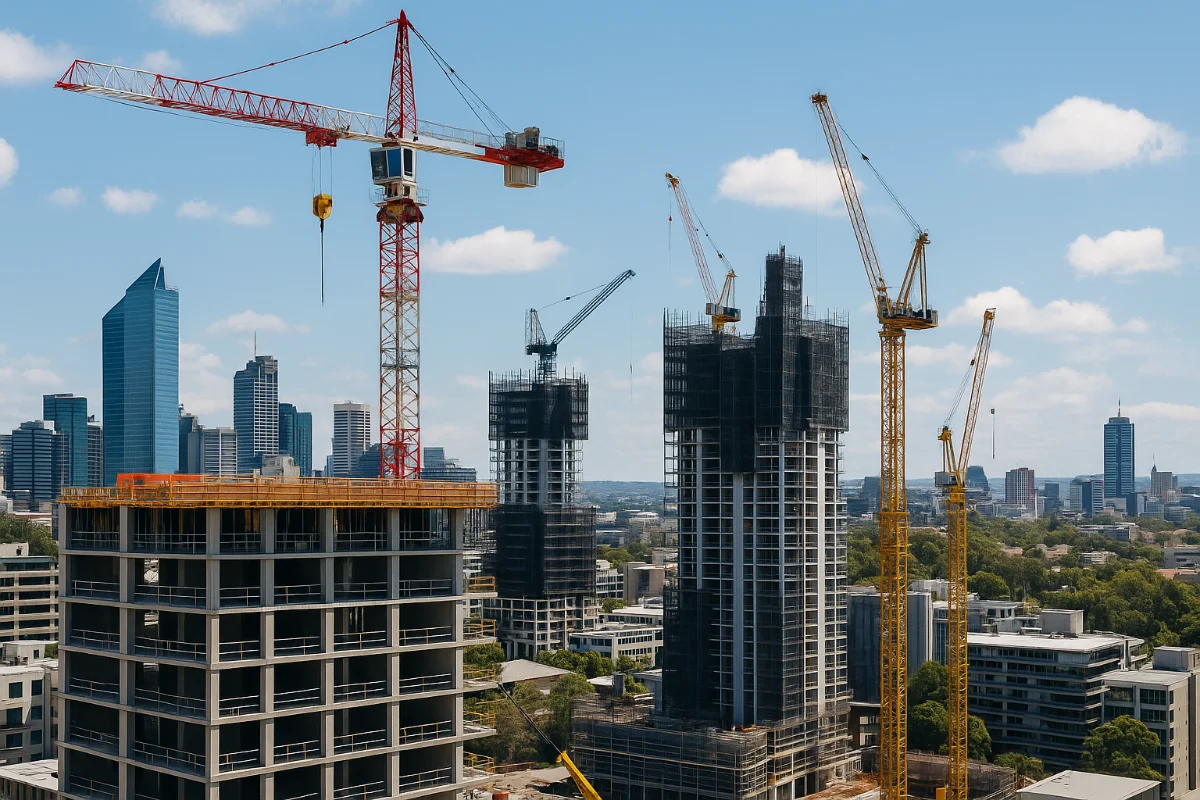
If you’ve driven past a construction site lately, you might have noticed something different. Maybe it was the drones flying overhead, the workers wearing smart helmets, or just the fact that the price of timber seemed to rise while you were stuck at the traffic light.
The truth is, the building industry is changing faster than ever. Construction Trends in Australia 2025 aren’t just about new designs—they’re about technology, sustainability, affordability, and a workforce under pressure. For homeowners, investors, and tradies, understanding these shifts is key to staying ahead.
This blog breaks down the top 10 construction trends in Australia for 2025—explained simply, with a dash of humour (because let’s face it, we need a laugh when talking about building costs).
Snapshot Summary (At a Glance)
- Sustainability is no longer a buzzword—it’s the baseline.
- Labour shortages remain one of the industry’s biggest headaches.
- Tech adoption (AI, drones, and 3D printing) is ramping up.
- Modular and prefabricated homes are going mainstream.
- Costs remain high, but smarter materials are offering solutions.
Want the full breakdown? Let’s dive deeper into what’s shaping Australian construction this year.
1. Sustainable Construction Becomes Standard
It’s no longer “nice to have”—green building is a must.
- Solar panels, recycled materials, and energy-efficient insulation are now common.
- Councils and developers increasingly demand sustainable design compliance.
- Home buyers expect it—because no one wants a house that guzzles power like a V8 ute.
Pro Tip: Ask your builder about Green Star ratings—they don’t just look good, they can boost property value.
2. Modular and Prefab Homes Go Mainstream
The days of waiting 18 months for a new build may soon be behind us.
- Prefabricated homes are built offsite and assembled like Lego.
- Faster build times mean lower costs and fewer delays.
- Regional areas in Australia are embracing prefab as a way to meet housing demand.
Did You Know? Some modular homes can be completed in 12 weeks, which is faster than most Aussies decide what Netflix show to binge.
3. Labour Shortages Continue to Bite
If you’ve tried booking a tradie, you already know: demand is high, supply is low.
- The construction industry faces a skills shortage across carpentry, plumbing, and electrical.
- Immigration policies are being tweaked to bring in skilled workers.
- Apprenticeships are being fast-tracked, but results will take time.
Labour shortages mean higher wages for workers—but longer wait times and higher costs for homeowners.
4. Smart Technology on Construction Sites
Move over hammers and nails, here comes AI.
- Drones are being used for surveying and safety checks.
- AI-powered project management tools help keep builds on track.
- Smart helmets monitor worker fatigue and safety conditions.
“Technology in construction isn’t about replacing workers—it’s about making their jobs safer and more efficient.” – Construction Innovation Council
5. Rising Construction Costs (Again!)
Yes, the dreaded topic—prices.
- Materials like timber, steel, and concrete remain expensive.
- Transport and supply chain issues continue to drive costs.
- Inflation adds extra pressure, pushing project budgets up.
It sometimes feels like you need a mortgage just to buy a wheelbarrow of bricks.
6. 3D Printing and Robotics
What once sounded like sci-fi is now real.
- 3D-printed houses are being tested in Australia, reducing waste and costs.
- Robotics assist with repetitive, labour-intensive tasks.
- While not mainstream yet, expect significant adoption in the next decade.
Pro Tip: Keep an eye on start-ups experimenting with affordable 3D-printed housing in regional communities.
7. Focus on Affordable Housing Solutions
With housing affordability at crisis levels, construction is adapting.
- Governments are pushing social and affordable housing projects.
- Smaller lot sizes and duplex designs are on the rise.
- Co-living and build-to-rent models are becoming more common.
Did You Know? In some states, up to 30% of new developments must be allocated to affordable housing.
8. Resilient Homes for Climate Challenges
Bushfires, floods, and extreme heat are shaping building codes.
- Fire-resistant materials like treated timber and fibre cement are in demand.
- Flood-proofing designs are standard in vulnerable areas.
- Energy-efficient cooling is critical as summers get hotter.
Climate resilience is no longer optional—it’s survival.
9. Digital Twins and Virtual Builds
Before building begins, developers can now create a “digital twin” of a property.
- Helps predict issues before construction starts.
- Saves money and time by reducing errors.
- Allows buyers to “walk through” a digital model of their home before it’s built.
Pro Tip: If you’re planning a build, ask your architect about digital twin technology—it could save you costly surprises.
10. New Building Materials Emerge
From hempcrete to recycled steel, Australia is innovating.
- Cross-laminated timber (CLT) is becoming popular for strength and sustainability.
- Hempcrete offers insulation and eco-friendliness.
- Recycled plastics are being used in concrete mixes.
Did You Know? Some Australian universities are trialling carbon-negative materials to cut emissions dramatically.
Quick Guide: For Homeowners Facing a New Build
The Situation
You want to build in 2025, but costs and delays make you nervous.
Common Challenges
- “Will my build run over budget?”
- “Will I even find tradies to do the work?”
- “How do I make my home future-proof?”
How to Solve It
✔ Explore Modular Options – Faster, cheaper, and more predictable.
✔ Lock in Contracts Early – Fix material and labour costs where possible.
✔ Go Sustainable – Eco features reduce long-term bills.
✔ Ask About New Tech – Builders using digital tools can reduce errors.
Why It Works
These strategies help manage costs, reduce risks, and ensure your home is ready for the future.
Interactive Quiz: Which Trend Fits You?
Q1: Are you more excited about…
- A. Sustainability features
- B. New technology
- C. Lower costs
Q2: Would you live in a prefab home?
- A. Yes, if it’s faster and cheaper
- B. No, I prefer traditional builds
- C. Maybe, if it looks like a “normal” house
Q3: Which scares you more?
- A. Interest rates
- B. Floods and fires
- C. Construction delays
Mostly A’s = You’re a green builder at heart.
Mostly B’s = You’re a traditionalist with high standards.
Mostly C’s = You’re a budget-conscious realist.
FAQs: Construction Trends in Australia 2025
1. Why are construction costs so high in 2025?
Global supply issues, inflation, and strong demand continue to push up prices.
2. Are prefab homes really durable?
Yes—modern modular homes can be as strong (or stronger) than traditional builds.
3. Will 3D-printed houses become common in Australia?
Not just yet, but expect them to play a role in affordable housing in the next decade.
4. How is climate change impacting construction?
More homes are being designed with fire, flood, and heat resilience in mind.
5. Is now a good time to build in Australia?
If you plan carefully, lock in contracts, and explore modern options, yes—it’s still worth building.
Conclusion
Construction Trends in Australia 2025 show an industry in rapid evolution. From prefab homes to AI-driven project management, builders, homeowners, and investors need to adapt to stay ahead. Sustainability, affordability, and resilience will define the next decade of construction.
While challenges like high costs and labour shortages remain, innovation offers exciting opportunities. Whether you’re planning a new build, investing in property, or simply curious about the industry, staying informed means staying prepared.
And hey, if nothing else, at least you’ll know why there are drones hovering over your neighbour’s half-finished house.
Disclaimer
This article is for general informational purposes only. It is not financial or legal advice. Always consult with qualified professionals before making construction, financial, or property-related decisions.


Leave a Reply