


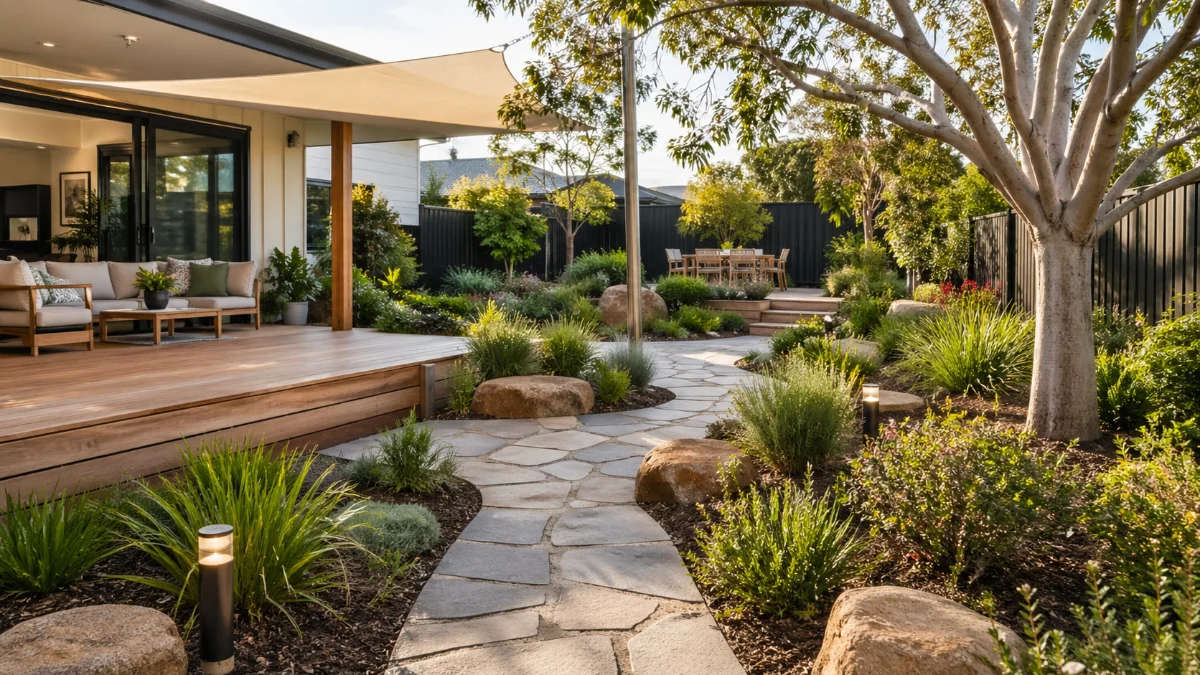
A beautiful outdoor space does not always need a full backyard rebuild, a giant budget, or a landscaping crew arriving with three trucks and dramatic music. Sometimes, the best transformation starts with simple, practical changes: better plant choices, smarter zones, improved lighting, and a layout that actually suits how you live.
If you are looking for landscaping ideas Australia, this guide shares realistic ways to improve your backyard, front yard, courtyard, or alfresco area. Whether your space is small, sloped, sunny, shaded, coastal, dry, or slightly chaotic, the goal is the same: create an outdoor area that is functional, attractive, and easier to maintain.
Quick Overview
Here is the short version:
- Choose plants that suit your local climate.
- Use zones for dining, relaxing, play, and garden beds.
- Add shade, lighting, and seating before overcomplicating the design.
- Use native and waterwise plants where possible.
- Reduce lawn if it is hard to maintain.
- Improve soil, drainage, and irrigation before buying expensive finishes.
- Start with one area first instead of trying to transform everything at once.
Water Corporation WA notes that waterwise gardens can be both beautiful and suited to local climate conditions, and native plants are often adapted to local soil and environmental conditions, which can reduce water and maintenance needs. (Water Corporation)
1. Start With How You Actually Use the Space
Before choosing plants, pavers, decking, or furniture, ask one simple question:
What do I want this outdoor space to do?
Common goals include:
- Entertaining family and friends
- Creating a quiet retreat
- Giving kids or pets space to play
- Growing herbs and vegetables
- Improving street appeal
- Reducing maintenance
- Adding shade and cooling
A backyard designed for weekend BBQs will look different from one designed for low-maintenance relaxation. A small courtyard needs different choices from a large family yard.
Pro Tip: Do not design for your fantasy lifestyle. Design for your real one. If you do not currently host 20-person dinner parties, you probably do not need a giant outdoor dining zone.
2. Create Simple Outdoor Zones
Zoning makes outdoor spaces feel more organised and useful.
Useful landscaping zones include:
- Dining zone: table, BBQ, shade, lighting
- Relaxation zone: lounge chair, bench seat, fire pit, privacy planting
- Garden zone: native plants, flowers, herbs, or vegetables
- Play zone: lawn, soft fall, sandpit, or open space
- Utility zone: bins, storage, clothesline, garden tools
Even small outdoor spaces can benefit from zoning. A balcony might have one corner for plants, one for seating, and one for storage. A courtyard can use pots, outdoor rugs, and screens to visually separate areas.
3. Choose Climate-Smart Plants
Australia has many climate zones, so the “best” landscaping plants depend heavily on where you live.
For many Australian gardens, good plant choices include:
- Native grasses
- Kangaroo paw
- Grevillea
- Lomandra
- Westringia
- Bottlebrush
- Coastal rosemary
- Succulents
- Hardy groundcovers
Water Corporation’s waterwise plant directory recommends choosing plants suited to local conditions and grouping plants with similar watering needs so gardens can be watered more efficiently. (Water Corporation)
Simple idea: Place thirstier plants together and drought-tolerant plants together. This avoids watering everything as if it has the same needs.
4. Use Native Plants for Beauty and Lower Maintenance
Native gardens can look modern, soft, colourful, or structured depending on how they are designed.
Benefits can include:
- Lower water use once established
- Less maintenance
- Better local climate suitability
- Habitat for birds, bees, and insects
- Year-round texture and flowering
Water Corporation notes that native plants are naturally adapted to local climate, soil, and environmental conditions, and can require less water and maintenance than non-native options. (Water Corporation)
Design tip: Mix plant heights. Use taller shrubs at the back, medium plants in the middle, and groundcovers near paths or edges.
5. Add Shade Before You Add More Furniture
In Australia, shade is not a luxury. It is survival with style.
Shade options include:
- Pergolas
- Shade sails
- Covered alfresco areas
- Trees
- Outdoor umbrellas
- Climbing plants over frames
Green cover and open spaces help cool air and surfaces in urban areas, and vegetation can support water management and reduce urban heat impacts. (AdaptNSW)
Quick win: If your outdoor area is too hot to use in summer, shade should be your first upgrade — not a new outdoor couch.
6. Improve Lighting for Night-Time Use
Outdoor lighting can completely change how a space feels.
Try:
- Warm string lights over dining areas
- Path lights along walkways
- Wall lights near doors
- Solar lights in garden beds
- Up-lighting for feature trees
- Step lights for decks and stairs
Keep it soft and warm. You want “relaxed outdoor evening,” not “airport runway.”
7. Replace High-Maintenance Lawn With Smarter Alternatives
Lawns can be beautiful, but they are not always practical, especially in hot or dry regions.
Alternatives include:
- Native groundcovers
- Gravel paths
- Stepping stones
- Mulched garden beds
- Decking
- Paving
- Artificial turf in small areas
- Mixed planting beds
If you keep lawn, reduce it to the area you actually use. A smaller, healthier lawn often looks better than a large, patchy one.
8. Use Mulch to Make Gardens Easier
Mulch is one of the easiest landscaping upgrades.
It helps:
- Reduce weeds
- Retain soil moisture
- Protect plant roots
- Improve the finished look of garden beds
Popular options include:
- Pine bark
- Eucalyptus mulch
- Gravel mulch
- Sugar cane mulch
- Wood chips
Pro Tip: Mulch can make even a half-finished garden look intentional. It is basically the “tidy haircut” of landscaping.
9. Add Structure With Paths and Edging
A garden instantly feels more designed when it has clear lines.
Try:
- Stepping stone paths
- Gravel walkways
- Timber edging
- Steel garden edging
- Brick borders
- Curved paths through planting
Paths are not just practical. They guide the eye and make the space feel planned.
Simple layout idea: Create one main path from the house to the key outdoor zone, then use planting to soften the edges.
10. Make Small Backyards Feel Bigger
Small outdoor spaces need smart design, not more stuff.
Try:
- Built-in bench seating
- Vertical gardens
- Wall-mounted planters
- Foldable furniture
- Slimline pots
- Mirrors used carefully
- Light-coloured paving
- Multi-purpose storage benches
Avoid filling every corner. Empty space is part of good design.
Quick Guide: A Simple Landscaping Plan for Australian Homes
Common Challenges
- “My backyard feels boring.”
- “The garden is too hard to maintain.”
- “The space gets too hot.”
- “I don’t know where to start.”
- “I want it to look good without spending too much.”
How to Solve It
1. Start with one zone
Pick the area you use most: patio, side yard, front entry, or garden bed.
2. Choose plants for your climate
Use native, drought-tolerant, or waterwise options where suitable.
3. Add shade and seating
A usable outdoor space needs comfort before decoration.
4. Improve the ground surface
Paving, gravel, mulch, or decking can define the space quickly.
5. Finish with lighting
Lighting makes the area usable and welcoming after sunset.
Why It Works
This approach keeps the project manageable. Instead of redesigning the entire yard at once, you create one finished area that improves your daily life immediately.
Interactive Quiz: What Landscaping Style Suits Your Home?
1. What do you want most from your outdoor space?
A. Low maintenance
B. Entertaining
C. Relaxation
D. More greenery
2. What is your biggest issue right now?
A. Too much upkeep
B. No clear layout
C. Too hot or exposed
D. It feels plain
3. What is your ideal garden mood?
A. Clean and simple
B. Social and practical
C. Calm and private
D. Lush and natural
Results
Mostly A: Go for a low-maintenance waterwise garden with mulch, hardy plants, and reduced lawn.
Mostly B: Focus on an alfresco or patio zone with seating, lighting, and easy access to the kitchen.
Mostly C: Add privacy screens, shade, soft planting, and comfortable seating.
Mostly D: Use layered native planting, feature trees, and garden beds with different heights and textures.
Budget-Friendly Landscaping Ideas
You do not need to spend thousands straight away.
Affordable upgrades include:
- Re-mulching garden beds
- Painting fences
- Adding solar lights
- Replacing tired pots
- Planting fast-growing screening plants
- Creating a gravel seating area
- Adding a small herb garden
- Installing simple edging
Best budget rule: Spend first on things that improve usability: shade, seating, paths, drainage, and lighting.
Sustainable Landscaping Ideas Australia
Sustainable landscaping is about designing outdoor spaces that use fewer resources and support local conditions.
Ideas include:
- Planting native and climate-suited species
- Reducing water-hungry lawn areas
- Using permeable paving
- Capturing rainwater where possible
- Composting garden waste
- Choosing recycled or locally sourced materials
- Planting trees for shade and cooling
The NSW Government notes that green cover and open spaces provide health, wellbeing, ecological, cooling, and water-management benefits, while also helping urban areas adapt to climate change. (AdaptNSW)
Natural areas can also help clean air, purify water, reduce pollution, slow floodwaters, cool streets, and provide habitat for wildlife. (Environment and Heritage)
Common Landscaping Mistakes to Avoid
1. Buying plants before planning
This leads to random garden beds that look confused.
2. Ignoring sun and shade
A plant that loves shade will not enjoy being roasted all afternoon.
3. Forgetting drainage
Poor drainage can damage lawns, paving, plants, and even foundations.
4. Choosing high-maintenance designs
If you hate gardening, do not build a garden that demands weekly devotion.
5. Overcrowding
Plants need space to grow. A new garden may look sparse at first, but patience prevents future chaos.
FAQs: Landscaping Ideas Australia
What is the easiest landscaping idea for Australian homes?
Start with one garden bed or outdoor zone. Add mulch, hardy plants, edging, and lighting. This creates a visible improvement without needing a full redesign.
What plants are best for low-maintenance landscaping in Australia?
Native and waterwise plants are often a good starting point because many are adapted to local climate and soil conditions. Good options can include lomandra, grevillea, westringia, kangaroo paw, bottlebrush, and native grasses, depending on your region.
How can I make my backyard look better on a budget?
Paint the fence, tidy edges, add mulch, use solar lights, group pots together, and create a small seating area. These changes can make the space feel more finished quickly.
Should I use artificial turf?
Artificial turf can work in small, shaded, or hard-to-maintain areas, but it can become hot in full sun and does not provide the same cooling or ecological benefits as living plants. Consider where and how it will be used.
How do I design landscaping for a hot Australian climate?
Prioritise shade, drought-tolerant plants, mulch, permeable surfaces, and water-efficient irrigation. Group plants by watering needs and reduce exposed hard surfaces where possible.
Conclusion
Great landscaping does not have to be complicated. The best outdoor spaces in Australia are practical, climate-smart, and designed around real life. Start by deciding how you want to use the space, then create simple zones, choose suitable plants, add shade, improve lighting, and make maintenance easier with mulch, paths, and smart watering. Whether you have a large backyard, small courtyard, front verge, or balcony, these landscaping ideas can help you create an outdoor space that feels more beautiful, usable, and enjoyable every day.
Disclaimer
This article provides general landscaping information only. Conditions vary depending on climate, soil type, local council rules, water restrictions, bushfire risk, and property layout. For major landscaping works, retaining walls, drainage changes, electrical work, or structural outdoor features, consult qualified landscaping, building, engineering, or local council professionals.


Leave a Reply