


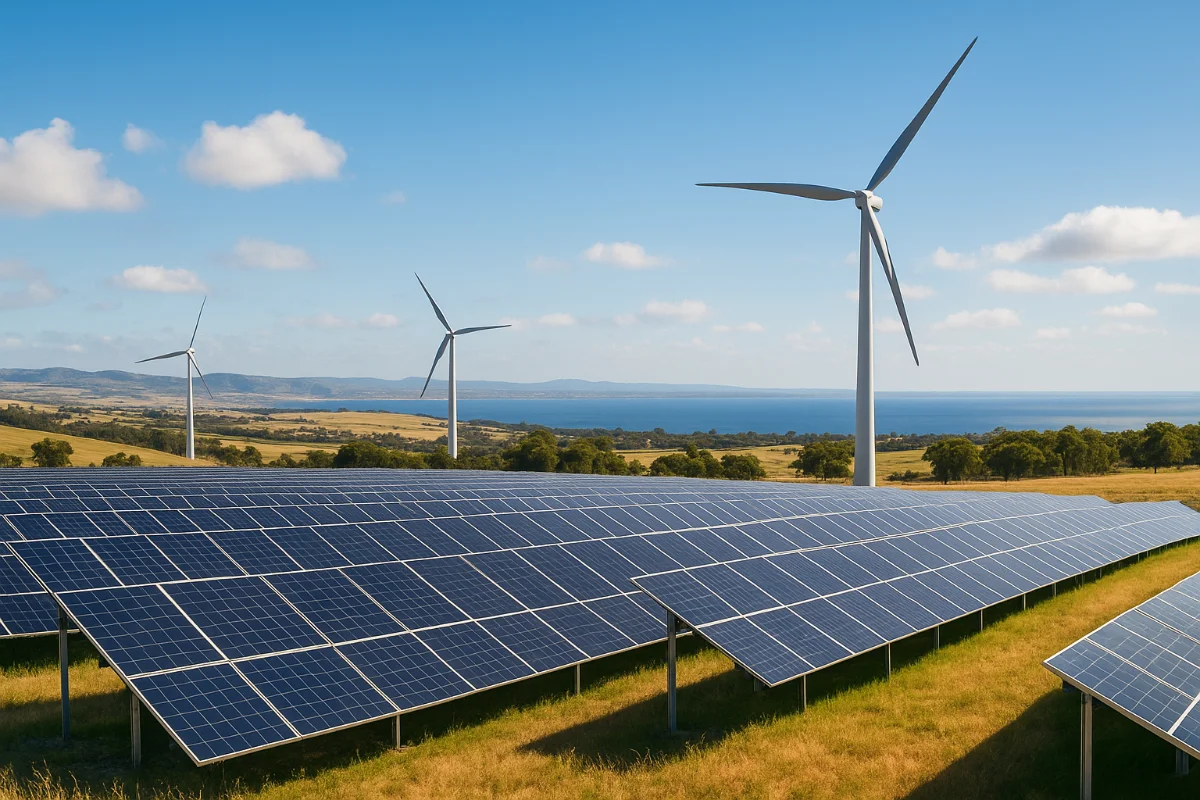
Why Renewable Energy Matters in Australia
If you’ve ever looked at your energy bill and thought, “Surely the sun shining on my backyard could do a better job,” you’re not alone. Australians are increasingly turning to renewable energy as both an environmental necessity and a practical solution to rising costs.
This post will break down everything you need to know about renewable energy in Australia, from its economic impact to practical tips for homeowners. Along the way, we’ll keep things light (pun intended), interactive, and tailored for Aussies curious about a greener, smarter energy future.
Quick Overview: Snapshot Summary
- Australia is a renewable energy leader, with solar and wind powering record levels of homes.
- Government incentives continue to make adoption more affordable.
- Tech innovations like battery storage and smart grids are reshaping the way we use power.
- Challenges remain, including energy storage and grid integration.
- The future is bright (literally)—by 2030, over 80% of Australia’s electricity could come from renewable sources.
Want to dive deeper? Keep reading—because the renewable revolution is just warming up.
Section 1: The State of Renewable Energy in Australia
Australia has one of the best natural environments for renewable energy:
- Solar: With more sunshine than almost anywhere else, Australia is the global rooftop solar champion.
- Wind: Southern and coastal regions are ideal for large-scale wind farms.
- Hydro: While limited, hydro continues to play a supporting role.
Fun fact: More than 3.6 million Australian households now have rooftop solar. That’s not just a statistic—it’s a movement.
Section 2: Why Renewable Energy Is Taking Off
1. Rising Costs of Traditional Energy
Electricity bills are climbing faster than you can say “turn the lights off, mate!”
- Fossil fuel volatility
- High transmission costs
- Global energy crises
2. Environmental Concerns
Australians are deeply aware of climate impacts—from bushfires to floods. Renewable energy is part of the solution.
3. Policy & Incentives
- Federal and state governments offer rebates, feed-in tariffs, and schemes like the Cheaper Home Battery Scheme.
- Businesses can also claim tax benefits by going green.
Section 3: Types of Renewable Energy in Australia
Solar Energy
- Rooftop solar panels
- Solar farms in regional Australia
- Solar + battery packages
Wind Energy
- Large wind farms in SA, VIC, and NSW
- Community wind projects bringing jobs to regional areas
Hydro and Pumped Hydro
- Snowy 2.0 project = Australia’s renewable “battery”
Emerging Technologies
- Green hydrogen
- Wave energy
- Bioenergy from agricultural waste
Section 4: Challenges in Renewable Energy
Let’s be real—it’s not all sunshine and rainbows.
- Storage Issues: Solar is useless at night without batteries.
- Grid Integration: The grid wasn’t built for two-way flows of energy.
- Policy Uncertainty: Governments sometimes change direction faster than a Melbourne weather forecast.
Section 5: Quick Guide – How Australians Can Embrace Renewables
The Situation
You’re a homeowner, tired of energy bills, but not sure where to start.
Common Challenges
- “Are solar panels worth the cost?”
- “What if I move house in 5 years?”
- “How do I pick a reliable installer?”
How to Solve It
- Start small: Even a 3kW system cuts bills significantly.
- Add storage later: Batteries can be retrofitted.
- Use comparison sites: Don’t sign the first contract you see.
- Government support: Check rebates in your state.
Why It Works
By starting small and scaling up, you lower bills, increase home value, and reduce carbon footprint—all without financial stress.
Need help? Book a renewable energy consultation before your next electricity bill shocks you!
Section 6: Interactive Corner
Mini Quiz: Which Renewable Energy Type Suits You Best?
- Do you love sunshine? → Solar
- Live near a windy coast? → Wind
- Got access to rivers or dams? → Hydro
- Tech enthusiast? → Hydrogen or batteries
(No wrong answers here—any choice is better than coal.)
Section 7: Did You Know?
Did you know? Australia generates enough renewable energy to power over 12 million homes each year.
Pro tip: Even if you rent, you can join a community solar program or switch to a green energy provider.
Section 8: The Future of Renewable Energy in Australia
Experts predict by 2035, coal could be nearly phased out, with renewables dominating.
- Smart grids will balance demand automatically.
- Electric vehicles (EVs) will double as home batteries.
- Hydrogen exports could make Australia a clean energy superpower.
FAQs About Renewable Energy in Australia
Q1: Are solar panels still worth it in 2025?
Yes. Panel costs have dropped, efficiency has improved, and rebates remain available.
Q2: Can I go completely off-grid?
Yes, but it’s costly. Most Australians choose hybrid systems—solar + grid backup.
Q3: What about renters?
Renters can benefit from community solar or switch to providers offering 100% green energy.
Q4: Is renewable energy reliable?
Absolutely. With smart storage, renewables are more stable than fossil fuels long-term.
Q5: Will renewable energy lower my bills?
Yes—most households see payback in 3–5 years.
Conclusion
Australia is at the forefront of the renewable energy revolution, and the momentum is only building. With abundant natural resources, supportive policies, and growing consumer demand, renewable energy isn’t just an alternative—it’s the future. From solar panels on suburban rooftops to mega wind farms powering entire regions, the shift is happening now. For Australians, this means cleaner air, lower bills, and a brighter tomorrow.
So, whether you’re a homeowner, renter, or business owner, it’s time to plug into the renewable wave. After all, the sun doesn’t send invoices—your energy retailer does.
Disclaimer
This article is for informational purposes only and should not be taken as financial or legal advice. Always consult with a licensed installer, financial advisor, or relevant professional before making investment decisions regarding renewable energy systems.


Leave a Reply