


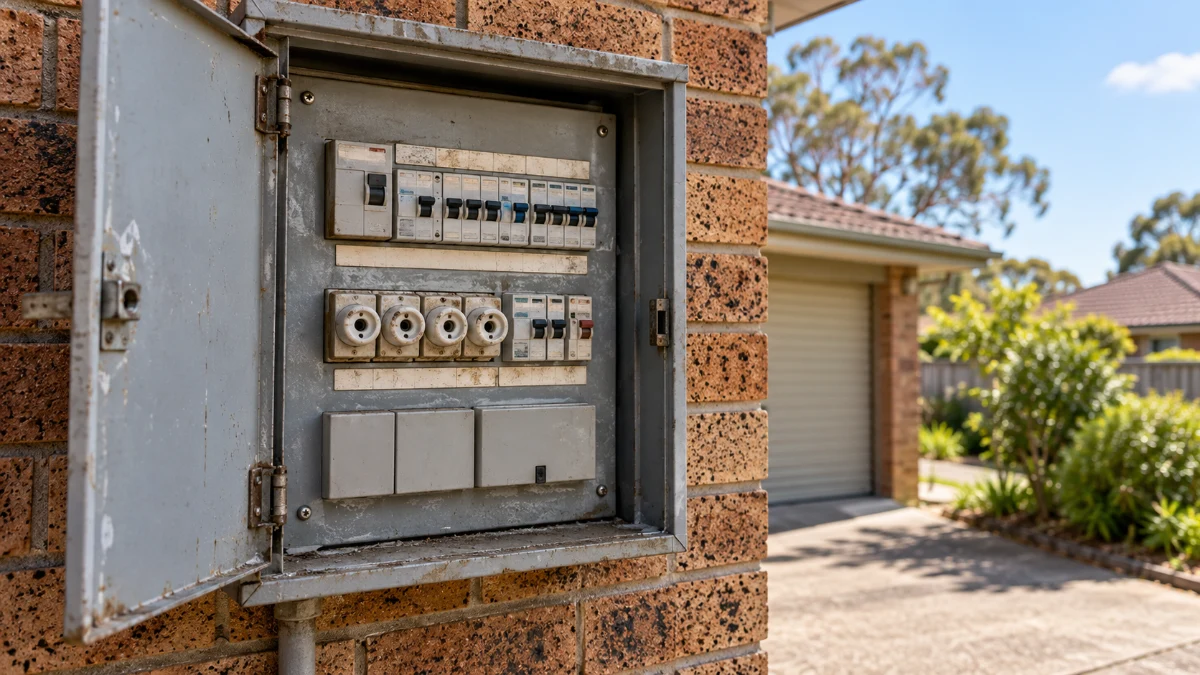
Common switchboard upgrade signs include old rewireable fuses, missing safety-switch protection, repeated tripping and concerns about accommodating new electrical equipment. These are reasons to ask a licensed electrician for an assessment. The appropriate work depends on the condition of the installation and the cause of any problems.
For homeowners, the useful question is what needs to change and why. An assessment may identify repairs, additional protection, new circuits or a switchboard replacement. Ask the electrician to explain the findings before you approve the proposed work.
Age and capacity
An older home deserves attention, particularly if its electrical history is unclear. Energy Safe Victoria recommends having household wiring checked if the house was built more than 30 years ago. This is a reason to arrange an inspection, rather than assume a particular replacement date applies to every switchboard.
Age and capacity are separate considerations. The electrician needs to assess the existing installation, the electricity supply and the equipment you intend to use. Space for another device in the enclosure does not, by itself, establish that the installation can support an additional load.
Reasons to book an assessment include:
- Older rewireable fuses and uncertainty about the protection installed.
- Repeated operation of circuit breakers or safety switches.
- Planned electrical equipment that may need additional circuits or capacity.
- Missing records about previous electrical alterations.
Repeated tripping can result from overloaded circuits, faulty appliances or wiring problems. Keep a note of what was operating and which device tripped, if you can identify it safely. Do not repeatedly reset a device that keeps tripping or attempt to bypass it.
Leave covers, fuse components and internal wiring to the electrician. Do not disturb old switchboard backing materials.
Shocks and tingles need urgent attention. If these come from a tap or metal fitting, contact your electricity distributor immediately and stay away from the switchboard and metal fittings. Seek medical attention if you have received an electric shock.
Safety switches
A safety switch, commonly called a residual current device or RCD, detects current leakage and quickly disconnects the affected circuit to reduce the risk of electric shock.
Circuit breakers and fuses respond to excessive current, such as an overload or short circuit, to protect the circuit wiring. Some devices combine safety-switch and circuit-breaker functions in one unit.
From the normal user-accessible front of an undamaged switchboard, safety switches can generally be identified by a button marked “T” or “Test”. If identifying the equipment requires removing a protective cover, leave it to the electrician.
The next question is which circuits are protected. One safety switch may cover only part of the installation. Lighting, power points, air conditioning, hot water and other equipment may be on different circuits.
Ask your electrician:
- Which circuits currently have safety-switch protection?
- Are additional safety switches needed for the proposed work?
- Have the existing devices been tested?
- How should I carry out routine user testing, and how often?
Safety switches provide additional protection, but they cannot prevent every electric shock. Installation, correct operation and the circuits they protect all matter.
Adding new loads
Discuss electrical capacity before purchasing equipment that needs a new connection or dedicated circuit. Give the electrician details of planned additions such as an induction cooktop, reverse-cycle air conditioning, a heat-pump hot water system, workshop equipment or a dedicated EV charger.
Provide model numbers, installation requirements and any further purchases planned for the next few years. This helps the electrician assess the intended combination of equipment and explain what work is needed.
For an EV charger, charging speed and household demand are relevant considerations. Australian Government guidance recommends seeking advice about the home’s electrical setup and notes that a dedicated charger may require a switchboard or supply connection upgrade. Smart charging and energy management may also be worth discussing.
Ask the electrician to distinguish between:
- Switchboard work: changes to the board, protective devices and circuit arrangements.
- Circuit work: wiring and connections needed for particular equipment.
- Supply work: changes to the electricity connection serving the property.
A switchboard upgrade does not automatically mean moving to three-phase power. Many household appliances and home charging options operate on single-phase power. Ask for an assessment of your proposed setup before agreeing to a supply change.
Quoting and compliance
A useful quote explains both the reason for the work and what will be delivered. Ask whether the recommendation addresses an identified safety problem, protection requirements, equipment capacity or a combination of these.
Request a written scope covering:
- The switchboard enclosure and protective devices being installed or replaced.
- Any new circuits and associated wiring.
- Testing and any required earthing or supply-related work.
- Required inspections, certification and network coordination.
- Management of old backing materials, including suspected asbestos where relevant.
- The expected power interruption and arrangements for restoring supply.
Ask what happens if testing identifies an existing wiring defect outside the quoted scope. Agree on how additional work will be explained and priced before it proceeds.
Check the contractor’s licence through the relevant state or territory regulator. Electrical requirements and paperwork depend on the jurisdiction and the work involved.
For example, electrical installation work in Victoria requires a Certificate of Electrical Safety. Energy Safe Victoria also states that a replacement main switchboard must be inspected by a licensed electrical inspector before power is restored to it.
In NSW, electricians must submit a Certificate of Compliance for Electrical Work to document testing and compliance. Ask how you will receive your copy.
Keep the quote, invoice, certificates and updated circuit information together. These records will help explain what was completed when you arrange future electrical work.
Conclusion
Switchboard upgrade signs are prompts for a licensed assessment. The electrician should explain how the board’s condition, protective devices, wiring and planned equipment affect the recommendation.
Before approving work, ask for a clear scope, the reason each item is needed, and the arrangements for testing, certification and restoring power. This gives you a practical basis for comparing quotes and planning the work.
FAQs
Will a switchboard upgrade include rewiring my home?
The scope depends on the condition of the existing wiring. Ask the electrician to specify whether the quote includes board work only, repairs to particular circuits or broader rewiring, and explain why each item is needed.
How long will the power be off?
Ask for an estimate for your specific job and confirm what must happen before supply can be restored. Discuss arrangements for essential powered equipment and whether an inspection or electricity distributor visit needs to be coordinated.
Sources
- Energy Safe Victoria: Household wiring. Guidance on older wiring and the functions of electrical protection devices.
- Queensland Electrical Safety Office: Safety switches. Guidance on device identification, circuit coverage and testing.
- Queensland Electrical Safety Office: Shocks and tingles. Advice on repeated tripping and urgent action following shocks or tingles.
- Victorian Government: Power Up Your Home. Guidance on switchboard capacity, supply upgrades and single-phase options.
- Australian Government: How to charge your electric vehicle. Advice on home charging, installation requirements and energy management.
- Energy Safe Victoria: Certificate of Electrical Safety. Information about certification for electrical installation work in Victoria.
- Energy Safe Victoria: Electrical installation FAQ. Requirements for inspecting replacement main switchboards before reconnection.
- NSW Government: Electrical compliance requirements. Information about testing and Certificates of Compliance for Electrical Work.


Leave a Reply