


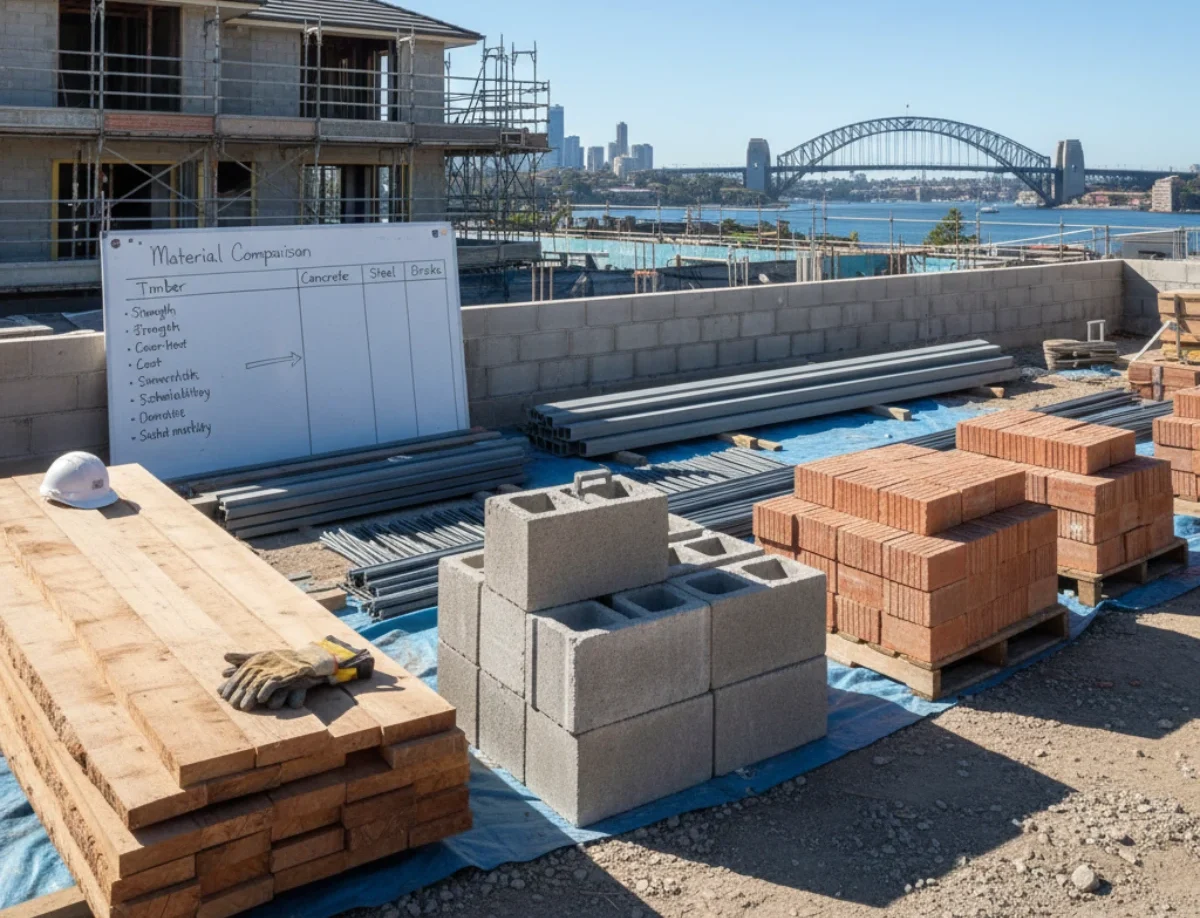
Selecting the right construction materials is one of the most important decisions in any building project. Whether you’re constructing a new home, commercial space, or renovation project in Australia, understanding construction materials, their costs, durability, and environmental impact is essential. This guide will help you make informed decisions, balancing performance and budget while keeping your project on track in 2026.
Quick Overview (Snapshot Summary)
- Common materials: Concrete, timber, steel, bricks, and composite materials
- Factors to compare: Cost, durability, sustainability, maintenance
- Tips: Choose materials suited to your project type and Australian climate
- Interactive: Use our cost-benefit checklist to decide smarter
Want to dive deeper? Keep reading for practical tips, expert advice, and interactive tools.
1. Common Construction Materials in Australia
1.1 Concrete
- Strong, durable, and fire-resistant
- Ideal for foundations, slabs, and commercial buildings
- Cost: Medium to high depending on mix and reinforcement
1.2 Timber
- Lightweight and versatile
- Popular for residential framing and interior finishes
- Cost: Moderate; quality depends on timber type and treatment
1.3 Steel
- Extremely strong, flexible, and ideal for multi-storey buildings
- Resistant to pests and fire
- Cost: High; fluctuates with global steel prices
1.4 Bricks
- Classic, low-maintenance, and energy-efficient
- Ideal for walls and facades
- Cost: Moderate; depends on quality and quantity
1.5 Composite & Eco-Friendly Materials
- Includes recycled plastics, bamboo, engineered wood
- Sustainable and lightweight
- Cost: Varies; often slightly higher but with long-term benefits
2. Factors to Consider When Comparing Materials
2.1 Cost
- Upfront cost: Purchase and delivery
- Long-term cost: Maintenance, repairs, and lifespan
- Always consider total lifecycle cost, not just the purchase price
2.2 Durability
- Australian climates vary (coastal salt air vs. inland heat)
- Choose materials suited to local conditions
2.3 Sustainability
- Look for certified eco-friendly materials
- Recyclable or low-carbon options can qualify for green building incentives
2.4 Maintenance
- Some materials like timber require regular treatment
- Others, like steel or composite, are low-maintenance
3. Quick Guide: Cost-Benefit Comparison Table
| Material | Approx. Cost (AUD) | Lifespan | Maintenance | Sustainability |
|---|---|---|---|---|
| Concrete | $$-$$$ | 50+ years | Low | Medium |
| Timber | $-$$ | 30–50 years | Medium | High (if sustainably sourced) |
| Steel | $$$ | 50+ years | Low | Medium |
| Bricks | $$ | 50+ years | Low | Medium |
| Composite | $$-$$$ | 30–50 years | Low | High |
4. Interactive Checklist: Choosing Materials for Your Project
✔ Identify your project type (residential, commercial, renovation)
✔ Set your budget and long-term goals
✔ Consider local climate and durability needs
✔ Compare lifecycle cost, not just purchase price
✔ Evaluate environmental impact and sustainability
✔ Ask your builder or supplier for recommendations
5. FAQs — Construction Materials Australia
Q1: What is the most cost-effective material for Australian homes?
- Timber and bricks are generally budget-friendly for residential projects.
Q2: Are eco-friendly materials more expensive?
- Often slightly higher upfront, but long-term savings and environmental benefits justify the cost.
Q3: Which materials are best for coastal areas in Australia?
- Steel, concrete, and treated timber resist corrosion and moisture better than untreated timber.
Q4: How do I calculate total cost of a material?
- Include purchase, delivery, installation, maintenance, and replacement over the material’s lifespan.
Conclusion
Choosing the right construction materials in Australia requires balancing cost, durability, sustainability, and maintenance. By understanding material types, comparing lifecycle costs, and considering the local climate, you can make informed decisions that save money and reduce future headaches. Timber, concrete, steel, bricks, and composites each have unique benefits depending on your project goals. Use interactive tools, consult your builder, and plan carefully to ensure your construction project in 2026 is cost-effective, efficient, and long-lasting. Smart material choices today will pay off in durability, aesthetics, and overall satisfaction for years to come.
Disclaimer
This article is for informational purposes only and does not constitute professional advice. Always consult licensed builders, engineers, or construction professionals for guidance specific to your project.


Leave a Reply