


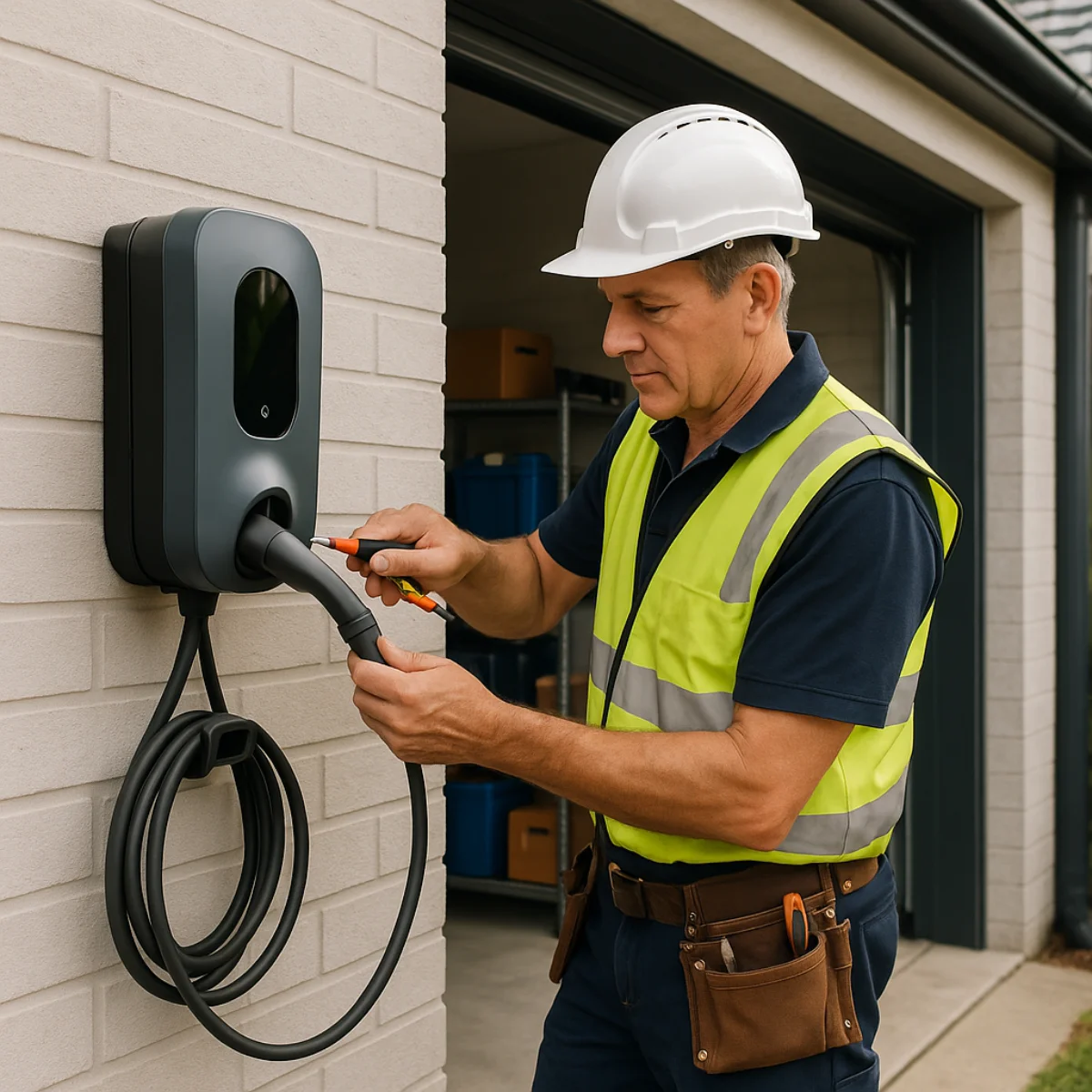
Electric vehicles are becoming mainstream in Australia — and so is the need for safe, efficient, and compliant home charging. But installing an EV charger isn’t as simple as plugging in a device. It involves electrical load calculations, wiring capacity, safety standards, and choosing the right charger for your home.
This guide explains everything you need to know before installing an EV charger at home in Australia — including costs, requirements, electrical safety considerations, and how to avoid the most common installation mistakes.
If you want a charger that’s safe, fast, compliant, and built to last, start here.
Snapshot Summary (Quick Overview)
| Topic | Key Insight | What It Means |
|---|---|---|
| Charger Types | Level 1, Level 2, Smart Chargers | Level 2 is the most common for homes |
| Installation Costs | $1,200–$3,500 (depending on setup) | Depends on wiring, distance & switchboard |
| Electrical Requirements | Dedicated circuit, RCD protection, load capacity | Your home must handle the extra load |
| Safety | Must be installed by a licensed electrician | DIY or unlicensed installs are illegal |
| Rebates | Vary by state (some apply through programs) | Savings possible on hardware or installation |
1. EV Charger Types in Australia (What Homeowners Need to Know)
There are three main charger types:
1. Level 1 (Standard Powerpoint)
- Uses a normal 10A household outlet
- Slow charging (12–24 hours for a full charge)
- Not suitable for long-term use
Best for:
Emergency / occasional charging only.
2. Level 2 Home Chargers (Most Popular)
- 7kW single-phase (most common in homes)
- 11kW–22kW three-phase (if your home supports it)
- Charges most EVs in 4–8 hours
- Requires professional installation & dedicated circuit
Best for:
Daily home charging with faster speeds.
3. Smart Chargers
Level 2 but with:
- App control
- Solar integration
- Scheduled charging
- Energy monitoring
- Load balancing
Best for:
Homes with solar or energy-conscious households.
2. How Much Does EV Charger Installation Cost?
Australian households typically pay:
Total Cost Range:
$1,200 – $3,500
| Item | Cost Estimate |
|---|---|
| Charger hardware | $600–$1,500 |
| Professional installation | $600–$2,000 |
| Switchboard upgrade (if required) | $1,500–$3,000 |
| Additional wiring (per metre) | $40–$80 |
| Three-phase upgrade | $2,000–$4,000 |
What affects cost most?
- Distance between switchboard and charger location
- Whether the home already supports high loads
- Single-phase vs three-phase power
- Age of electrical system
- If wall penetration or trenching is required
Pro Tip:
Install the charger as close to the switchboard as possible — wiring distance is the biggest cost variable.
3. Electrical Requirements for Home EV Chargers
Installing a charger adds a significant load to your home. For safety and compliance, your system must meet:
Legal & Electrical Requirements
- Dedicated circuit for the EV charger
- RCD / RCBO protection (mandatory for safety)
- Adequate main switchboard capacity
- Correct cable size (as per AS/NZS 3000)
- Earthing and bonding compliance
- Load management plan if charging at peak times
Single-Phase vs Three-Phase for EV Charging
| Type | Benefits | Considerations |
|---|---|---|
| Single-Phase (7kW) | Common, affordable, suitable for most homes | Slower for larger EV batteries |
| Three-Phase (11–22kW) | Much faster charging | Requires three-phase supply to home |
Did You Know?
Most EVs cannot accept the full 22kW rate — they cap around 7–11kW on AC charging.
4. Safety Requirements (This Is Where Homeowners Make Mistakes)
EV chargers draw a high, sustained electrical load. Incorrect installation can cause:
- Overheating
- Circuit overload
- Fire risk
- Charger failure
- EV battery damage
Mandatory: Licensed Electrician Only
Australian law requires EV chargers to be installed by a:
- Licensed electrician
- Who is trained and experienced in EV charging systems
Never Allow:
❌ Extension leads
❌ Shared circuits
❌ DIY wall sockets
❌ Non-compliant devices (common on eBay/AliExpress)
Pro Tip:
Always ask your electrician for a Certificate of Electrical Safety (CES) after installation.
If they don’t provide it → the installation is not legally compliant.
5. Where to Install Your EV Charger (Location Matters)
Choose locations that are:
- Close to your switchboard
- Sheltered from rain
- Well-ventilated
- Clear from tripping hazards
- Within cord reach of the EV port
Best Locations
- Garage wall
- Carport wall
- External wall (weather-proof unit required)
Avoid Installing:
- Near sprinklers
- Where cars can hit the charger
- In poorly ventilated areas
- Where cables need to run across walkways
6. The Installation Process (What Actually Happens)
Step-by-Step
- Site assessment
- Electrical load and switchboard check
- Quote provided
- Charger installation
- Wiring and safety components installed
- Testing & commissioning
- Certificate of Electrical Safety issued
Time Required
- Simple installs: 2–3 hours
- Complex installs: 5–8 hours
7. Do You Need a Switchboard Upgrade?
Not always — but many older homes do.
Signs you may need an upgrade:
- Ceramic fuses
- No spare circuit capacity
- Frequent tripping
- Old wiring
- No RCD/RCBO protection
Typical upgrade cost: $1,500–$3,000
Did You Know?
Homes built before 1990 often require switchboard upgrades for modern EV chargers.
8. Using Solar or Batteries for EV Charging
If your home has solar, you can reduce charging costs significantly.
Three Options
- Standard Level 2 Charger
Uses grid or solar depending on household load. - Smart Solar Integrated Charger
Prioritises solar → cheapest long-term charging. - Battery-Assisted Charging
Charges the EV at night using stored solar energy.
Best Setup:
Solar + smart charger + home battery
→ Lowest long-term running cost.
9. Electricity Cost of Charging an EV in Australia
On average:
- Home charging cost: $0.20–$0.35 per kWh
- EV battery size: 50–80 kWh
- Cost per full charge: $10–$28
- Estimated range: 350–500 km
Charging with solar: near $0 (if daytime solar surplus)
10. Rebates & Incentives (State-Based)
Some states offer support through energy programs:
- VIC: Solar rebates may apply to smart charger installations
- ACT: Incentives for EV readiness infrastructure
- NSW/QLD/WA: Occasional grants (varies by year)
Check current programs:
https://www.energy.gov.au
Quick Guide: EV Charger Home Requirements
✓ Dedicated circuit
✓ RCD/RCBO protection
✓ Safe mounting location
✓ Correct cable sizing
✓ Licensed electrician install
✓ Certificate of Electrical Safety
✓ Switchboard capacity checked
If any of these are missing → your charger is not compliant.
Interactive Self-Assessment Quiz
| Question | Yes | No |
|---|---|---|
| Does your switchboard have RCD protection? | ||
| Do you have spare circuit capacity? | ||
| Is your charger location sheltered? | ||
| Do you have single-phase or three-phase power? | ||
| Do you have solar panels installed? |
If you answered “No” to more than 2 → expect an upgrade or additional work.
FAQs
Q: Can I install an EV charger myself?
No. It is illegal in Australia.
Q: Do I need three-phase power?
Not necessarily — most homes are fine with 7kW single-phase.
Q: Will charging my EV increase my power bill?
Your bill goes up, but your fuel costs drop dramatically.
Q: Can multiple EVs use one charger?
Yes — through load balancing or alternating schedules.
Q: Does weather affect charger lifespan?
Outdoor units must be IP-rated for Australian conditions.
Conclusion
Installing an EV charger at home is one of the smartest upgrades you can make — but it must be done safely, professionally, and with the right electrical capacity. A compliant installation ensures faster charging, lower running costs, long-term safety, and full compatibility with solar or battery systems. By understanding charger types, installation costs, electrical requirements, and safety standards, you can make confident decisions that support your home and your EV for years to come. Think of the charger as essential infrastructure — and treat it with the same care.
Disclaimer
This article provides general electrical and energy information only. Always consult a licensed electrician for installation and safety advice.


Leave a Reply