


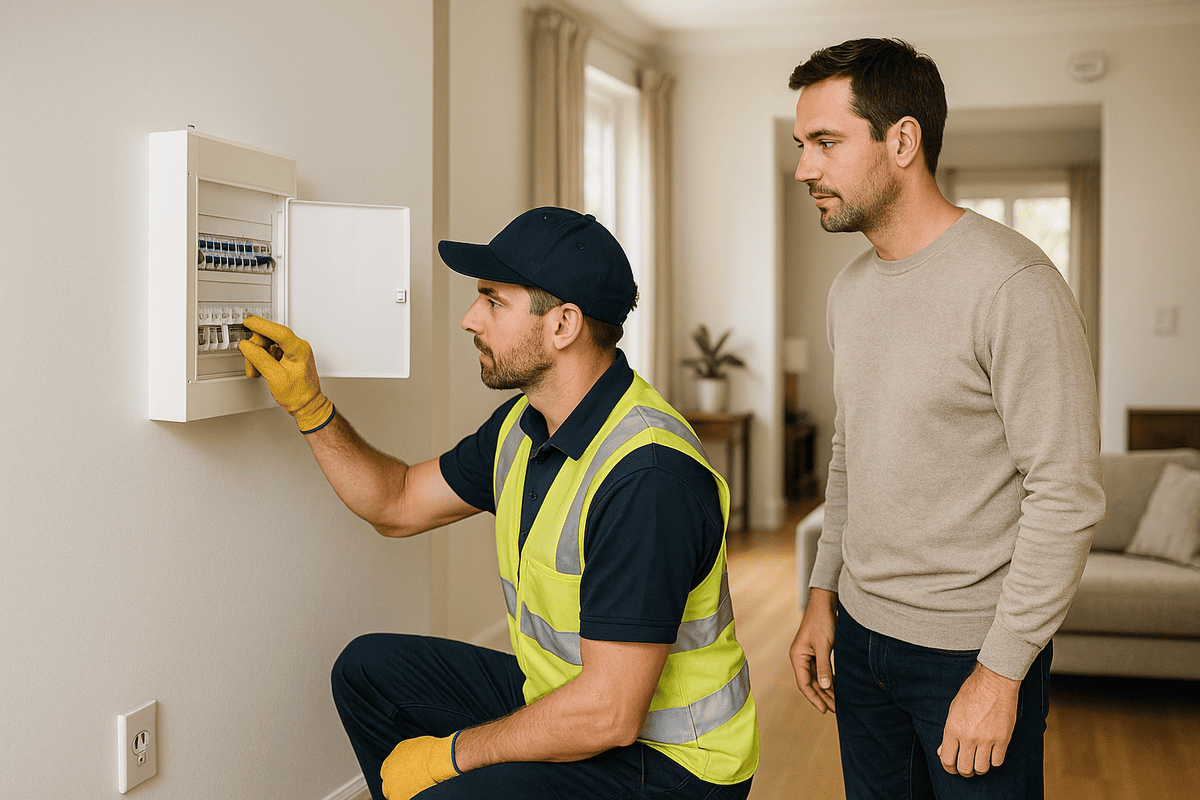
Electricity: we can’t live without it, but let’s be honest—it’s not something you want to mess around with. Flick a switch, charge your phone, cook dinner, binge Netflix—it’s all powered by electricity. But behind that convenience lies some serious risk if things go wrong. That’s why home electrical safety tips in Australia aren’t just “nice to know”—they’re essential.
In this post, we’ll give you practical advice, a few laughs (because nobody wants a dry safety lecture), and even a quick quiz to test how “electrically smart” you are. Whether you’re a homeowner, a renter, or a DIY enthusiast who thinks “she’ll be right” (spoiler: she might not be), this guide is for you.
⚡ Snapshot Summary: Home Electrical Safety Tips Australia
Don’t have time to read 2000 words? Here’s the short version:
- Never DIY electrical work—it’s illegal and dangerous in Australia.
- Check your smoke alarms and test them monthly.
- Switch to safety switches (RCDs) on all circuits.
- Avoid overloading power boards (no, your Christmas lights don’t need their own suburb-wide circuit).
- Replace damaged cords and appliances immediately.
- Book a licensed electrician for inspections every couple of years.
Want the full breakdown (with examples, pro tips, and a quiz)? Keep reading!
Why Electrical Safety Matters in Australia
Australia has some of the strictest electrical safety regulations in the world. Why? Because accidents happen more often than you’d think:
- Faulty wiring causes thousands of house fires every year.
- Electrocution is one of the leading causes of accidental injury in homes.
- Many accidents happen with portable appliances, like kettles, heaters, and extension leads.
Electricity doesn’t discriminate—it doesn’t care if you’re in Sydney, Melbourne, or a tiny outback town. The good news? Most accidents are preventable with simple, smart safety steps.
Top Home Electrical Safety Tips (Australia Edition)
1. Don’t DIY – Call a Licensed Sparky
In Australia, it’s flat-out illegal to do your own electrical work unless you’re licensed. That means no wiring light switches, no installing ceiling fans, and definitely no “YouTube tutorials” with screwdrivers and a prayer.
- ✅ What you can do: change light bulbs, reset circuit breakers, plug in appliances.
- ❌ What you can’t do: anything that involves wiring or opening power outlets.
Pro Tip: Always check your electrician is licensed—you can search online through your state’s licensing authority.
2. Test Your Safety Switches Regularly
Every Aussie home should have RCDs (Residual Current Devices)—aka safety switches. These cut off power instantly if there’s a fault.
- Press the “test” button every 3 months.
- If it doesn’t trip, call an electrician immediately.
Think of it like checking your car brakes—better to find out now than when it’s too late.
3. Avoid Power Board Overload
Australians love a good power board. But stacking one power board into another? That’s the electrical equivalent of balancing three meat pies on top of each other—it’s only a matter of time before disaster strikes.
- Spread appliances across outlets.
- Use surge-protected boards for electronics.
- Never put power boards under carpets or rugs (they get hot).
4. Check Appliances and Cords
Your kettle might be a national treasure, but if the cord is frayed, it’s time to retire it.
- Replace damaged cords immediately.
- Don’t tape them up (that’s not a fix, it’s a hazard).
- Unplug appliances when not in use, especially toasters, kettles, and heaters.
5. Keep Water and Electricity Separate
Seems obvious, right? Yet bathrooms and kitchens are hotspots for accidents.
- Never use appliances near sinks, bathtubs, or pools.
- Install waterproof outlets in wet areas (a job for your sparky).
- Outdoor power points should be weatherproof and covered.
6. Smoke Alarms Save Lives
By law, every Australian home must have working smoke alarms. They’re your first line of defence in an electrical fire.
- Test them monthly.
- Replace batteries yearly (if not 10-year lithium).
- Replace the whole unit every 10 years.
7. Book Regular Electrical Inspections
When was the last time you had a sparky check your home wiring? If your answer is “never” or “back when John Howard was PM,” it’s time.
- Every 2–5 years is recommended.
- Especially important for older homes.
- A professional can spot problems you won’t see.
🔍 Interactive Section: Are You an Electrical Safety Hero? (Quick Quiz)
- True or False: It’s legal to replace a light switch yourself in Australia.
- How often should you test your safety switches?
- a) Never
- b) Every 3 months
- c) Once every 5 years
- Where’s the worst place to put a power board?
- a) On a desk
- b) Under a carpet
- c) Mounted on the wall
- Smoke alarms should be tested:
- a) Monthly
- b) Yearly
- c) Never (she’ll be right!)
Answers:
- False (must be licensed)
- b) Every 3 months
- b) Under a carpet
- a) Monthly
How’d you go? If you scored less than 3/4, maybe book that electrical check sooner rather than later.
⚡ Common Mistakes Aussies Make (With a Hint of Humour)
- “Double-adapter on a double-adapter” (seriously, don’t).
- Using outdoor extension leads indoors—tripping hazard, anyone?
- Thinking duct tape is the answer to exposed wiring.
- Trusting Uncle Kev who “used to be good with tools.”
FAQs: Home Electrical Safety Tips Australia
Q: Can I change a power outlet myself?
Nope. In Australia, that’s strictly for licensed electricians.
Q: How often should my wiring be inspected?
Every 2–5 years, or sooner if you notice flickering lights, burning smells, or tripping breakers.
Q: Do power boards really cause fires?
Yes—when overloaded or covered. Stick to quality boards with surge protection.
Q: Are safety switches and circuit breakers the same?
No. Safety switches protect people, circuit breakers protect wiring and appliances.
Conclusion
Home electrical safety in Australia isn’t about being paranoid—it’s about being smart. A few simple habits—testing your switches, not overloading boards, booking regular inspections—can save lives, homes, and bank accounts.
So next time you’re tempted to DIY electrical work, remember: leave it to the pros. After all, would you trust a YouTube tutorial to fly a Qantas plane? Exactly.
Take charge of your safety today:
- Check your smoke alarms.
- Test your safety switches.
- And when in doubt—call a licensed Aussie sparky.
Because when it comes to electricity, the best shock is no shock at all.


Leave a Reply