


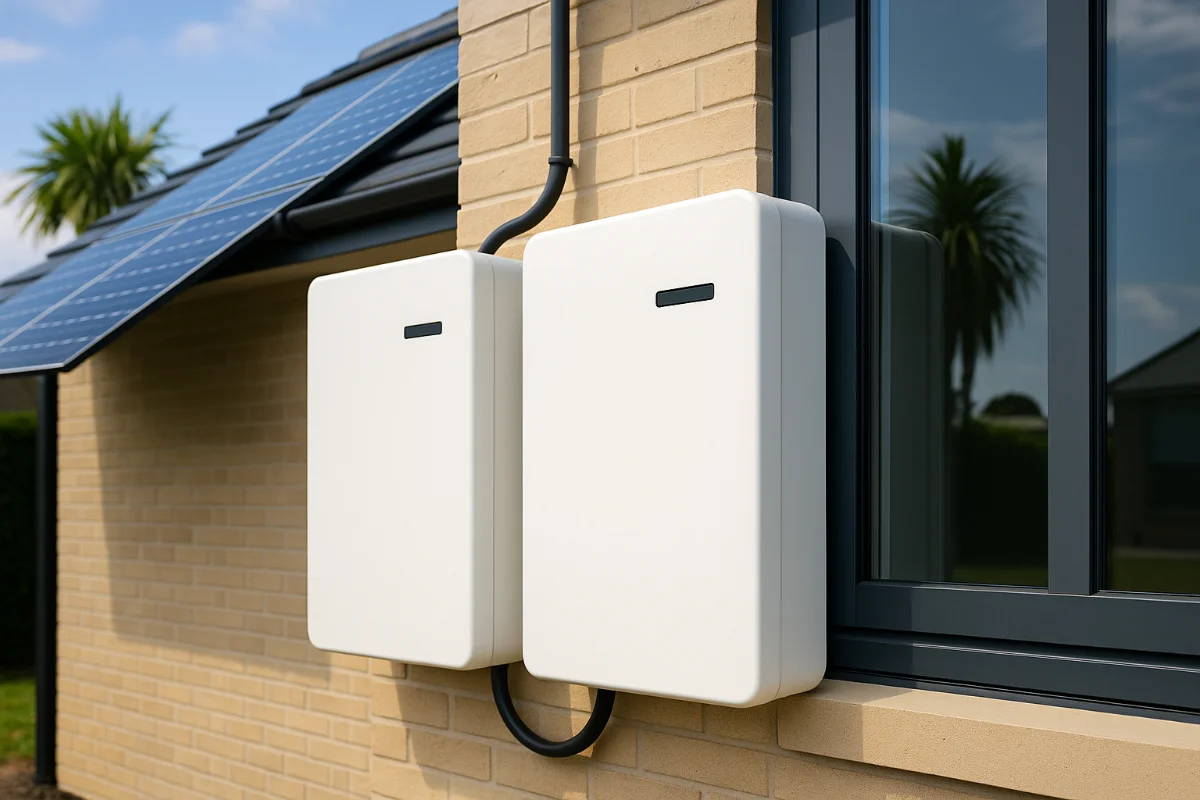
If you’re exploring battery storage solutions in Australia—whether for your home, your business or simply because the electricity bill made your eyeballs roll—you’ve come to the right place. In 2025 the landscape is shifting fast: from major grid-scale battery projects to residential systems that actually make sense. This post will walk you through what battery storage solutions look like in Australia today, how to evaluate them, and what you should consider before diving in (yes, including budget, tech, incentives and a bit of humour because “harnessing power” sounds cooler than “paying another bill”).
Quick Overview: “Key Takeaways”
- Battery storage solutions in Australia are booming: homes and businesses are adopting systems faster, aided by falling costs and policy support. (Sunwiz)
- The major factors: your energy usage profile, whether you already have solar, what your electricity rates are, and the size & type of battery you choose.
- For 2025, the emphasis is on value for money, good installation, warranties and realistic pay-back—not just “shiny gadget”.
Want to dive deeper into how to pick a system, understand the tech and figure out if it’s for you? Keep reading!
1. Why Battery Storage Solutions Are Gaining Traction
Let’s set the scene: battery storage isn’t just futuristic—it’s increasingly practical in Australia.
Big numbers & big deals
- In 2025 the Australia residential battery storage market is expected to grow at a CAGR of about 19.8% from 2025-2033. (IMARC Group)
- Investment in large-scale battery energy storage systems (BESS) climbed significantly in early 2025, with over AUD 2.4 billion committed in Q1 alone. (Carbon Credits)
- Installations of home battery units have surged—one report shows in Q2 2025 more than 23,900 units installed in August alone, with average size ~19 kWh. (Elite Power Group)
What’s driving this?
- Electricity price volatility: When rates go up, self-generation + storage = appealing.
- Solar adoption: More households with PV want to store excess rather than export cheaply.
- Reliability & resilience: Blackouts, grid issues push people to own part of their energy solution.
Did You Know? Even if your battery only saves you from one bad hot-summer grid outage, you’ll feel like a superhero.
If you were waiting for the “perfect time” to adopt a battery storage solution in Australia, the window is open—but it won’t stay “novel gadget” for long. It’s becoming mainstream.
2. Understanding How Battery Storage Solutions Work
Let’s demystify the tech so you don’t get overwhelmed by jargon (and because “kWh, V, cycles” can sound like alienese).
Core elements
- Battery capacity (kWh): Total energy it can store (e.g., 10 kWh = 10 kilowatt-hours).
- Power rating (kW): How fast it can deliver that energy.
- Cycles & lifespan: How many times you can charge/discharge before performance degrades.
- Battery chemistry/type: Most residential systems use lithium-ion; others might use alternative tech.
- Integration with solar/grid: Does it pair with your PV? Can it work off-grid or just as backup?
What you should ask
- What capacity do I need for my usage?
- Will the system allow me to maximise self-consumption of solar?
- What’s the warranty, expected lifespan, maintenance requirements?
- How many cycles? What happens after degradation?
- Is the installer qualified? Are there state/territory incentives I can claim?
Pro Tip Box:
Imagine your battery like a water tank. The size matters, but so does how quickly you fill it, how quickly you empty it, and whether you’re leaking through holes. Choose wisely.
3. Residential vs Commercial vs Grid-Scale Solutions
“A battery is a battery,” they say—but not quite. The type and scale matter a lot.
Residential systems
- Usually 5–20 kWh capacity for home use.
- Pair with rooftop solar for optimum benefit.
- The pay-back depends on how much of your solar you’d otherwise export cheaply, and how much of your usage happens when solar isn’t generating.
Commercial/industrial systems
- Larger capacities (hundreds of kWh to MWh).
- Used for demand-charge management, peak shaving, backup, resilience.
- Different business case than home use.
Grid-scale Battery Energy Storage Systems (BESS)
- Huge systems (MW-GW scale) that support the electricity network.
- In Australia, these are being rapidly deployed to support renewables and grid stability. (Modo Energy)
- If you’re a homeowner you don’t buy these—but your local network may benefit and help justify some incentives.
Why it matters
Selecting the right scale and model ensures you don’t overpay for “too much battery” or buy something that doesn’t match your real usage. The tech is great—but only if it fits your lifestyle and energy profile.
4. What to Look For When Choosing Battery Storage Solutions
Here is the shopping list for what to check before you sign on the dotted line.
Key criteria
- Compatibility with existing solar/inverter: If you already have PV, check the battery works with your inverter or whether upgrades are needed.
- System efficiency & usable capacity: A 10 kWh battery may only deliver 8 kWh due to losses—ask for “usable capacity.”
- Warranty & performance guarantee: Look for 10+ years or a set number of cycles (e.g., 6,000 cycles).
- Certification & safety standards: Especially in Australia—make sure the system is approved, installer is accredited, warranty backed.
- Incentives & rebates: Different states/territories may offer incentives for home battery installation.
- Installation cost vs pay-back vs lifetime cost: Don’t just chase “cheap”—look at long-term savings and value.
- Management software & monitoring: A good app or system where you can see your battery’s performance is a plus.
Bold note: Buying a battery for the sake of “having one” is like buying a sports car and only using it to go to the supermarket—fit matters.
5. Quick Guide – Realistic Example
Intro:
Let’s imagine you live in Brisbane. You have a rooftop solar system and your bills have been climbing. You’re thinking: “Battery storage solutions might help—but where do I start?”
Common Challenges:
- Are your evening electricity rates creeping up, meaning you export cheap and import expensive?
- Do you generate excess solar mid-day that you can’t use, meaning waste?
- Are you concerned about outages or want more energy independence?
How to Solve It:
- Assess your usage profile: Look at your past 12-months of energy bills and solar export/import data.
- Choose right size battery: Aim for something that helps shift solar usage to evening rather than oversized.
- Compare options & installers: Request quotes, check brand, service, warranty, compatibility.
- Factor in future savings & incentives: Consider rebates, expected energy savings, lifetime value.
Why It Works:
By aligning your purchase with your specific household profile and energy behaviour, your battery becomes a tool—not a novelty. You’ll get more return, less buyer’s-regret.
If you’re thinking of installing a home battery in 2025, talk to a trusted installer and get a full cost/benefit analysis for your home.
6. Costs, Incentives & Return on Investment
Money matters—let’s talk realistic dollars (and maybe a little laugh at “how many years will it take to pay back?”).
Typical costs
- Residential battery systems in Australia currently vary—depending on size, brand, installation—say AUD 8,000-15,000+ for typical 10-15 kWh systems (incl. installation).
- Pay-back might range from 5-10+ years depending on your usage, solar export rates, tariffs and whether you fully utilise the stored energy.
Incentives & subsidies
- Some states have home battery programs or rebates.
- The falling cost of battery technology (economies of scale + manufacturing improvements) improves value.
- Market reports indicate strong growth in uptake with subsidies, larger installations, VPP participation. (IMARC Group)
What to calculate
- Estimate your annual energy savings (by shifting usage, reducing imports).
- Estimate changes in export value (if you instead store and use your own solar).
- Compare lifetime cost, warranty, maintenance and replacement potential.
Did You Know?
One report notes average installed residential battery capacity in recent Australia data ~19 kWh in mid-2025. (Elite Power Group)
7. Pitfalls & What to Avoid
Because yes—some things can go wrong (like choosing a battery that runs out of juice mid-BBQ).
Common mistakes
- Buying too big/too small a system for your usage.
- Ignoring future changes (e.g., adding EV charging, growing family).
- Choosing an installer solely on price without checking credentials or warranty coverage.
- Failing to check compatibility with solar system or inverter.
- Ignoring battery management: e.g., failing to monitor performance, missing when things degrade.
Quick warning
If your installer sells you “battery storage solutions” as just a luxury toy rather than a calculated investment, you may end up with less-than-ideal value.
8. Interactive Quiz – “Is a Home Battery Right for You?”
Tick the boxes that apply to your situation:
- You have a rooftop solar system and export a significant amount of energy. ☐
- You pay higher than average electricity rates for evening/night usage. ☐
- You’ve experienced or worry about power outages or grid reliability. ☐
- You’re planning to install an EV at home or expect your usage to increase. ☐
- You’re comfortable spending upfront now for long-term savings (5–10 years). ☐
Results:
- 0-1 ticks: A battery might not be a priority yet—review your usage and solar first.
- 2-3 ticks: You could benefit from a battery solution—seek quotes and check sized options.
- 4-5 ticks: You’re an excellent candidate for battery storage solutions—this may deliver good value and fit your energy profile well.
9. FAQs
Q: What size battery do I need for my home solar system?
A: It depends on your evening/night usage, solar generation surplus and whether you want full backup or just self-consumption. Professionals often recommend matching the battery capacity to the portion of solar you can utilise outside daylight hours.
Q: Will a home battery make my electricity bill go to zero?
A: Unlikely. While batteries help reduce imports and increase self-consumption, some grid connection, maintenance and usage spikes still mean you’ll likely pay something. Think “reduce significantly” rather than “eliminate.”
Q: Are all batteries safe? I’ve heard about fires.
A: Battery systems approved and installed correctly in Australia undergo stringent safety standards. However you should ensure the unit is compliant, the installer is accredited, and the warranty covers safety and performance.
Q: Can I just buy a second-hand battery or a cheap import?
A: It’s risky. Battery chemistry, warranty, performance degradation, support and safety all matter. It may seem cheaper now, but cost of maintenance or replacement may outweigh initial savings.
Conclusion
Battery storage solutions in Australia in 2025 are no longer a niche gadget—they’re a serious, calculated option for households and businesses looking to gain more control over their electricity, improve resilience and make their solar investment stretch further. But the key is to match the system to your needs, evaluate cost vs benefit, check credentials and avoid hype. With the right approach, you’ll be powering smarter—not just storing power in hope.
Disclaimer
This blog post is for general informational purposes only and does not constitute professional advice. Battery storage solutions, solar integration, incentives and energy markets vary by state/territory in Australia and depend on individual circumstances. Please consult a qualified energy advisor or installer before making major decisions.


Leave a Reply